

World Teachers’ Day 2026: Shine a Light on Educators
Most of what great educators do never shows up on a report. It is the quiet word with a child who is nervous at drop-off. Sometimes it is noticing that one student has stopped joining in. And often it is a pattern of bricks rebuilt for the fourth time, with patience.
On Friday 30 October, Australia marks World Teachers’ Day 2026, and this year’s national theme invites us to “shine a light on Australia’s teachers.” For that reason, we are happy to join in. At Six Bricks Learning, we work every day with early childhood educators, primary teachers, therapists and home educators, and we see how much skill and care sits behind each short, simple activity.
In short, this post celebrates what skilled educators do, explains why that expertise matters, and shares practical ways to grow it together. It is for educators, and for anyone who wants to say thank you.
Quick Overview
- Who is this for? Educators, school leaders and families who want to recognize teachers.
- What will you learn? What experienced educators do well, why it matters, and five ways to share expertise using short play routines.
- Key takeaway: Skilled teaching is made of small, thoughtful moments, and a specific thank-you helps those moments shine.
What Do Skilled Educators Actually Do?
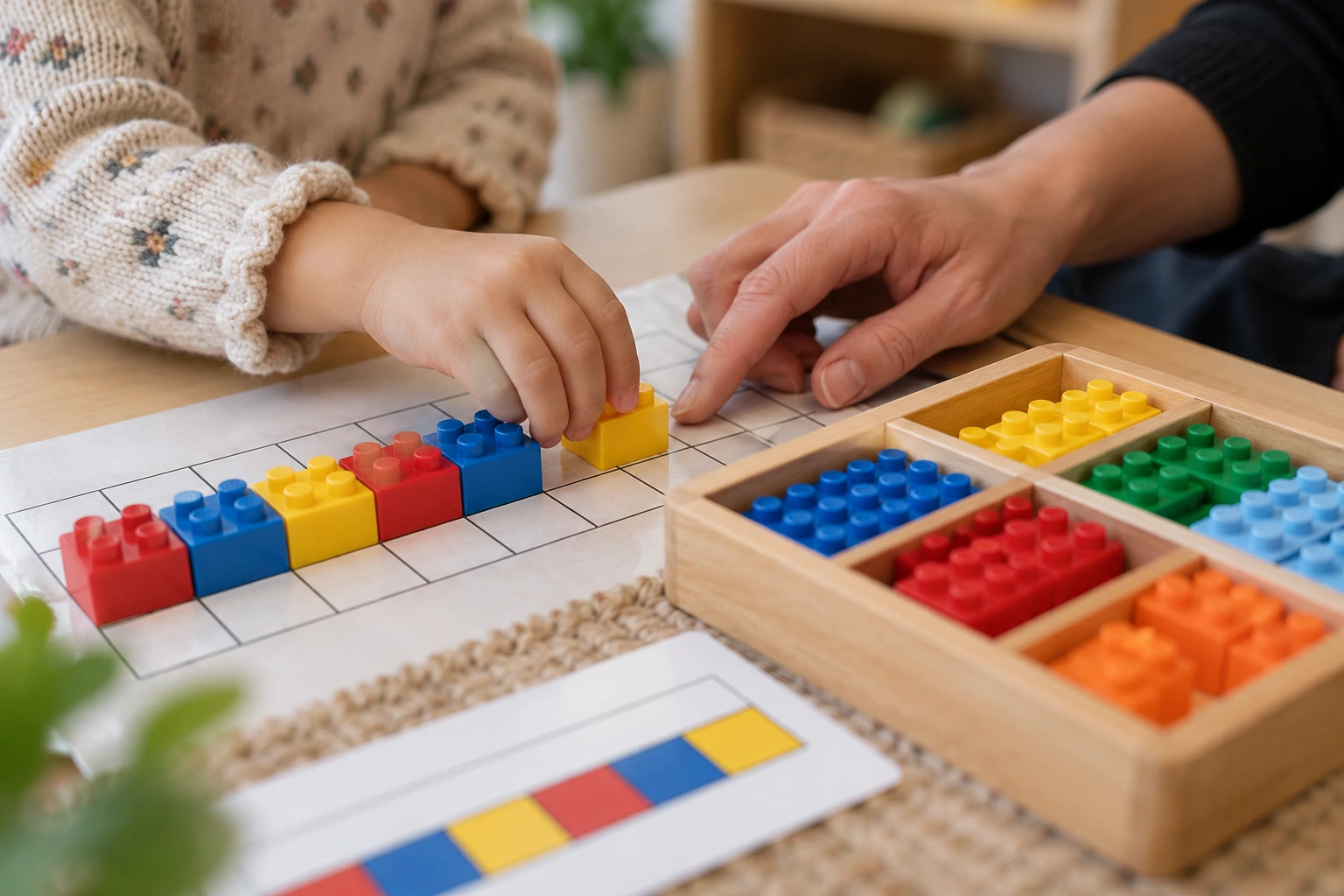
Skilled educators notice, respond and stretch. In practice, they read a child’s moment, adjust the support and step back at the right time. However, that is hard to see from outside, and it is the core of quality teaching.
In fact, this reflects Vygotsky’s Zone of Proximal Development. Children grow most when gently stretched, given challenges just beyond what they can do alone, with the right support. Finding that point for each child, in a room of twenty or more, is therefore a daily act of professional judgment.
Skilled educators also build the conditions for playful learning. The LEGO Foundation’s research identifies five characteristics of playful learning: joyful, meaningful, actively engaging, iterative and socially interactive. For example, educators create these conditions in small ways: a good question, a safe space to try again, a moment shared with a friend.
Why Does Educator Experience Matter?
Recent Australian research points to educator experience as a key part of quality early learning. In the University of Melbourne’s EDGE Study of Victorian 3-Year-Old Kinder, teacher experience was the factor most strongly linked to high-quality programs, according to the Victorian Government’s summary of the findings.
Overall, this is encouraging. After all, experience is something educators build together. It grows through reflection, mentoring, shared observation and practice. It also deserves time, trust and support.
Executive function skills (working memory, cognitive flexibility and inhibitory control) are among the strongest predictors of academic success, and they are highly trainable in early childhood. In addition, skilled educators grow these skills daily, often without naming them. In fact, naming them helps. As a result, it gives teams a shared language to talk about what they see.
What Does This Look Like in a Room? A Scenario
Imagine a Year 1 classroom just after lunch. Energy is high and focus is low. So Teacher Marcus puts a tray of six DUPLO®-style bricks in the middle of a table of four children. “Three-minute challenge,” he says. “Build a tower that has one of each color, and a rule: no two neighbors the same.”
As the children build, some plan, some experiment, one watches first. Meanwhile, Marcus asks, “What will you try next?” and “How did you decide?” As a result, by minute three, the room is calmer, and the children are ready to move on.
In short, Marcus did not need a long lesson plan. Instead, he needed a short routine, a good question and years of knowing his class. A two-to-five-minute brain break like this also gives educators a moment to observe: who planned, who adapted, who needed a prompt?
Five Ways to Share Expertise This Term
Expertise grows fastest when it is shared in small, regular steps. Fortunately, these five ideas fit into a normal week.
- Swap a routine. For example, each team member brings one two-minute routine to the next meeting. Then try each for a week.
- Observe a brain break. Invite a colleague in to watch a short activity and share what they noticed. Above all, keep it strengths-based.
- Name the skill. After an activity, say aloud which skill it practiced, such as “that was working memory” or “that was flexibility.”
- Pair experience with curiosity. Match a newer educator with a more experienced one for a short routine, then reflect together.
- Say thank you specifically. For instance, “Thank you for the way you handled transition time” means more than a general thank you.
Additionally, our free introduction sessions and NESA-accredited online courses are designed to help educators build confidence with the Six Bricks method at their own pace. Our learning programs are approved for Queensland Uplift funding.
How Can Families and Leaders Say Thank You?
The most meaningful thanks are specific, personal and timely. Notably, AITSL’s campaign invites people to share a moment when a teacher made a difference, using #WorldTeachersDay2026. In many cases, a short note works well.
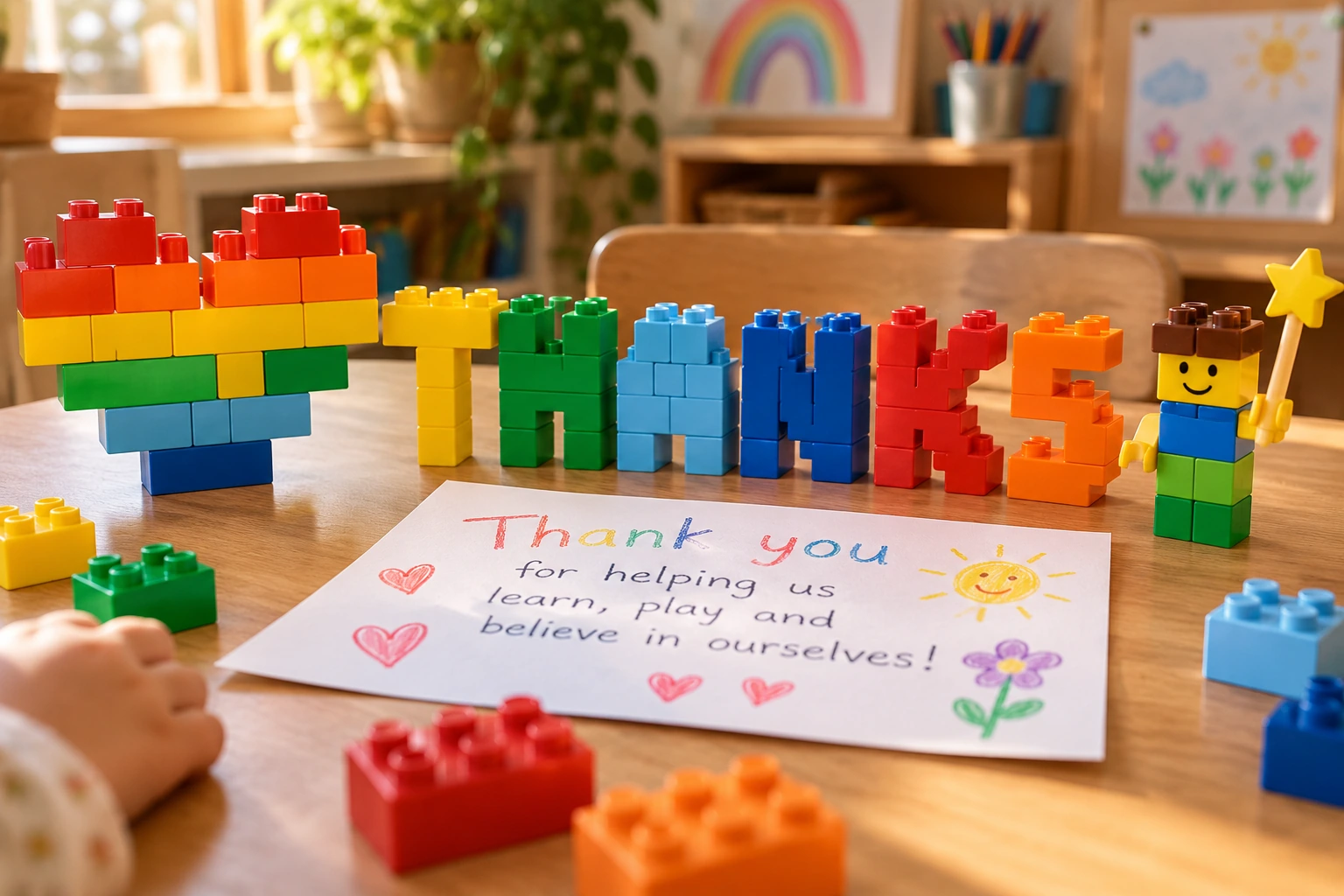
First, leaders can protect a little time on 30 October for teams to share a win. Similarly, families can write two sentences: what the teacher did, and what it meant for their child. Finally, children can build a thank-you with bricks and explain it. Best of all, it is playful, personal and easy to do.
For wellbeing ideas that go beyond one day, see our post on teacher wellbeing and classroom stress. Likewise, to see the research behind educator experience, read our companion post on what Victoria’s EDGE Study tells us about quality early learning.
Key Takeaways
- Skilled educators notice, respond and stretch, and that judgment is the heart of quality.
- Importantly, Australian research highlights educator experience as a key part of quality early learning.
- Experience grows through sharing routines, observing and reflecting together.
- Short play routines give educators a moment to observe as well as teach.
- Ultimately, a specific, personal thank-you means the most on World Teachers’ Day.
FAQ
When is World Teachers’ Day 2026 in Australia?
How can I thank a teacher on World Teachers’ Day?
How can schools celebrate World Teachers’ Day without adding to workload?
What are quick brain break activities for the classroom?
Are there professional development courses for early childhood educators using play?
Celebrate your team with one new routine
Try one short, playful routine together this World Teachers’ Day. To begin, join a free introduction session, explore our online courses, or book a demo to see Six Bricks in your setting.
Explore Six Bricks for Educators