
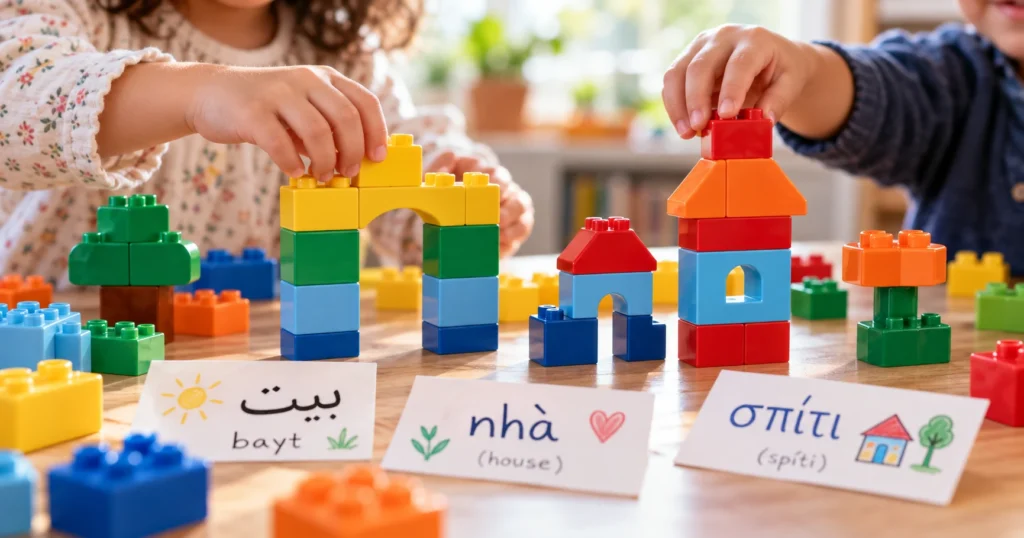
Children’s Week 2026: Celebrating Home Languages Through Play
A four-year-old stands at the edge of the mat. At home she chatters in Arabic all day, yet at preschool she says almost nothing. Her educator wonders whether she understands. Then a story begins, bricks come out, and she quietly builds a house and whispers its name in her first language.
That moment is exactly what Children’s Week is about. This year’s national theme, from 24 October to 1 November, is based on Article 30 of the United Nations Convention on the Rights of the Child: children have the right to use their own language, celebrate their culture and practice their religion. In a classroom, that right is not abstract. Instead, it shows up in whether a child feels free to speak, build and share who they are.
At Six Bricks Learning, we use six DUPLO®-style bricks, short activities and hands-on storytelling that need no reading or perfect English to join. In this post, we share practical ways to welcome home languages and cultures into play, so every child can take part. Put simply, it is a guide to celebrating home languages through play, at school and at home.
Quick Overview
- Who is this for? Early childhood educators, early primary teachers, EAL/D support staff and families.
- What will you learn? Why home language matters for learning, and four low-prep ways to use brick play to honor it.
- Key outcome: A classroom where every child’s language and culture have a place, starting this Children’s Week.
Why Does a Child’s Home Language Matter in the Classroom?
A child’s home language is the base they use to make sense of new ideas, so welcoming it supports learning rather than slowing it down. After all, children think, feel and tell stories in the language they know best. When that language is welcome, they take part with more confidence.
Developmental research broadly supports the view that language, thinking and belonging grow together. Vygotsky’s Zone of Proximal Development reminds us that children grow most when gently stretched with the right support. For a child learning English, that support often includes the language they already have. A peer who shares it, a word on a card, or a story told two ways can all act as a bridge.
Welcoming home languages is also about identity. A child who sees their language and culture valued at school learns that they belong there. As a result, that sense of safety underpins everything else, from friendships to focus. However, educators do not need to speak every language in the room. They need to make space for them.
How Does Brick Play Make Space for Every Language?
Brick play lets children show meaning with their hands first, so words in any language can follow. A child can build a family, a market, a garden or a celebration before they have the English words for it.
Multi-sensory learning, which engages touch, sight and movement together, strengthens memory and supports children who learn best through hands-on experience. Embodied cognition theory adds that handling and moving objects helps children build stronger understanding. In practice, this means a child can match a brick to a word, say it in their language, then learn the English word beside it.
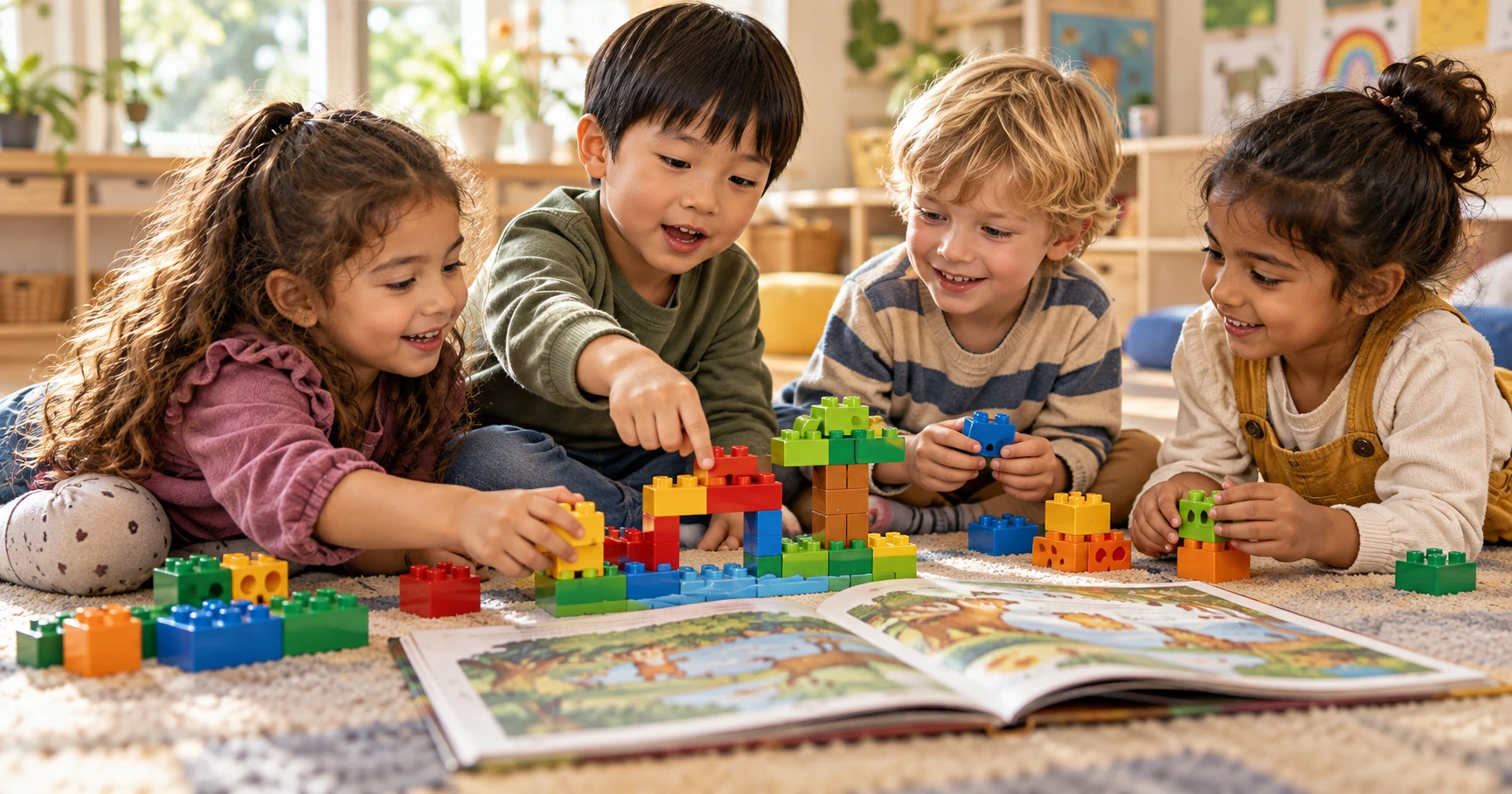
The LEGO Foundation’s research identifies five characteristics of playful learning: joyful, meaningful, actively engaging, iterative and socially interactive. Language-rich brick play can meet all five. For example, it is meaningful when children build from their own lives. Likewise, it is social when they teach each other words. Finally, it is iterative because they can rebuild and retell again and again.
Build-a-Book: stories children can retell in any language
Build-a-Book pairs a picture book with a brick kit. As each page is read, children “pick their bricks” and build the character or scene. The series has five titles: Dimples, the Littlest Dinosaur; Jambo, the Joyful Giraffe; Kito, the Bravest Kitten; Diggy, the Helpful Dog; and Cracker, the Lonely Crocodile.
Because children build before they tell, they can retell the story in their home language, in English or in both. Educators and families can also share the same story in two languages and compare how it sounds.
What Does This Look Like in a Real Classroom? A Snapshot
One short Build-a-Book session can invite every child’s language into the room without putting anyone on the spot. Here is how that might look.
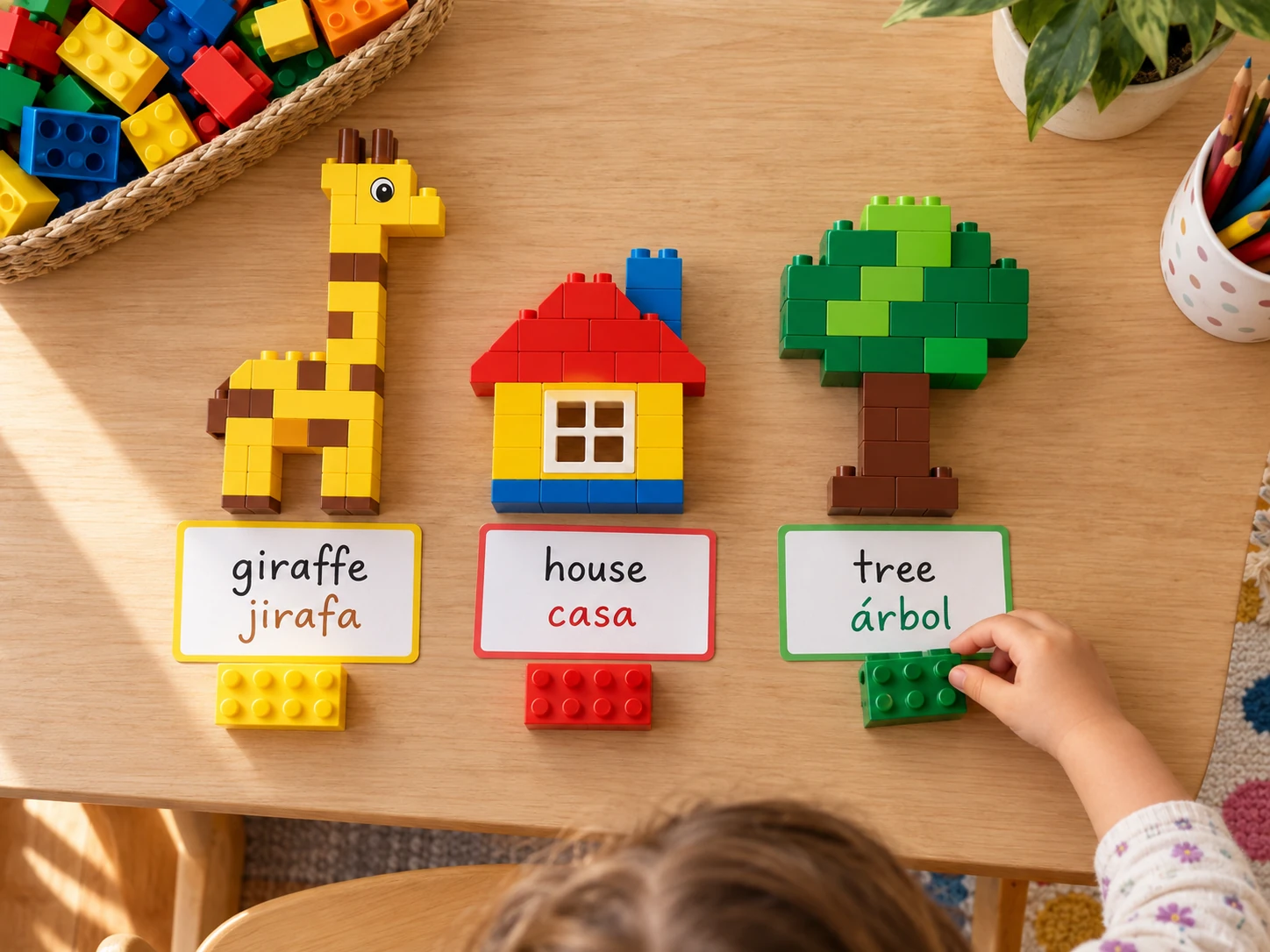
Imagine a mixed Foundation and Year 1 room during Children’s Week. The educator reads a page of Jambo, the Joyful Giraffe, then says, “Pick your bricks.” Children build the giraffe’s world. Then she asks, “How would you say giraffe at home?”
Hands go up. One child says the word in Vietnamese, another in Auslan sign, another in Greek. The educator writes each on a card with a brick colored beside it. Meanwhile, children build in pairs and teach each other. As a result, a child who has said little all term becomes the expert in the room.
The whole activity takes about ten minutes. In fact, no child is put on the spot, and nobody has to speak if they prefer to build. Afterward, the educator notes who took part, which words were shared and what to extend tomorrow. Together, that is welcoming practice and intentional teaching at once.
Likewise, a parent at home can do the same with a favorite bedtime story: build one scene, say the words in their family’s language, then in English.
Four Ways to Honor Language and Culture This Children’s Week
Each of these four ideas takes little preparation and keeps sharing voluntary. To begin, pick one to try this week.
- Brick word wall. Make a small display of key words in each child’s home language beside a built object. Ask families to help with spelling and pronunciation.
- Story swap. Invite a family member to tell a short story in their language while children build along. Translation is optional; the bricks carry the meaning.
- Build my place. Offer a Small Group Kit and ask children to build somewhere that matters to them: a home, a park, a place of celebration. They tell it in any language.
- Greeting circle. Each child places a brick as they share a greeting in their language. Then the group repeats it together.
Keep every option voluntary. Above all, children should choose whether, when and how to share. Also, check with families first about what they are comfortable sharing, especially around culture and faith.
Key Takeaways
- Children have a right to use their own language and celebrate their culture, and Children’s Week 2026 puts that right in focus.
- A welcomed home language supports confidence, belonging and learning.
- Brick play lets children show meaning with their hands, so no one needs perfect English to take part.
- Build-a-Book gives children a story they can retell in any language.
- Keep sharing voluntary, and involve families in deciding what to share.
FAQ
How can I support a child’s home language in an English-speaking classroom?
What are good activities for multilingual learners in early childhood?
When is Children’s Week 2026 and what is the theme?
Can Build-a-Book be used with children who are learning English?
How can parents celebrate home language and culture through play?
Stories Every Child Can Join
Explore our Build-a-Book series and Group Kits, and bring your classroom’s many languages into play this Children’s Week.
Explore the Collection