
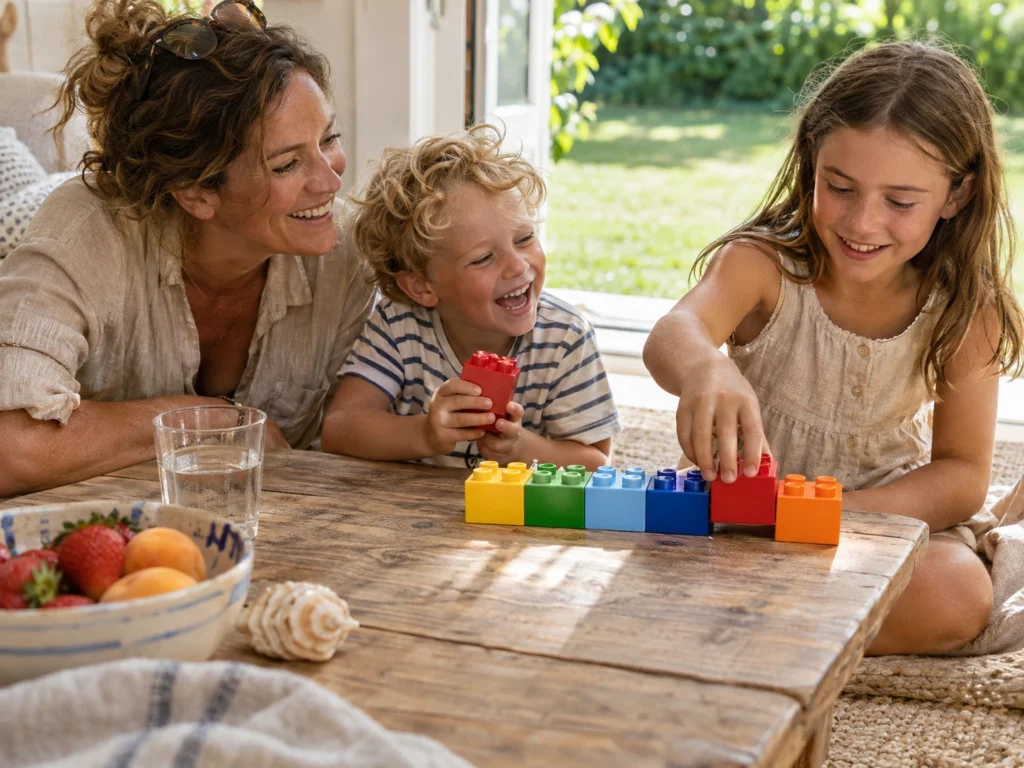
Summer Holiday Play Ideas for Calm, Playful Learning
By the second week of the holidays, many families know the feeling. The first days felt like freedom. Now the house is loud, the screens are creeping up and someone says, “I’m bored.” It is a very ordinary moment, and it is a good one to plan for.
Summer holiday play ideas work best when they are simple. Long breaks are a gift for children. They offer time, space and the chance to follow their own interests. They can also be unsettling. Routines disappear, days blur and children who rely on predictability can find the change hard. Parents often feel pressure to fill every hour or to keep “learning” going, and that pressure is tiring.
You don’t need a packed timetable. A few repeatable play ideas can give the days a gentle shape. At Six Bricks Learning, we support families and educators with short, hands-on play routines. This post shares a flexible rhythm for the holidays, five play ideas to try and a short brick routine you can use any time. It is for parents and carers of children in the early and primary years.
Quick Overview
- Who is this for? Parents, carers and educators who share ideas with families.
- What will you learn? Why a light holiday rhythm helps children, five play ideas, and how to keep it low-pressure.
- Key takeaway: Holidays can feel relaxed and connected, with playful thinking still part of the day.
Why Does a Light Routine Help Children During the Holidays?
A light routine gives children a sense of what comes next, and that supports calm and self-regulation. It does not need to look like a school day.
Self-regulation is one of the most important skills children develop in early childhood, and one of the most teachable. It grows when children can predict their day. When school routines vanish, a few anchors can fill the gap: a morning start, a quiet time after lunch, an outing or a play block.
Executive function, the brain’s management system, also benefits. Working memory, cognitive flexibility and inhibitory control are among the strongest predictors of academic success, and they are highly trainable in childhood. Everyday play, such as planning a build, switching to a new game or waiting a turn, gives them gentle exercise without a worksheet in sight.
Rhythm is not the same as a schedule. Think of it as a few “usual things” in a loose order, with plenty of room for boredom, which is where invention often starts.
What Are Five Summer Holiday Play Ideas to Try?
The best holiday play is open-ended, hands-on and easy to set up. These five ideas use ordinary things plus a few bricks.
- Build the plan. Each morning, build the day with bricks: breakfast, outing, quiet time, dinner. Children choose the order where they can. It supports sequencing and gives them a say.
- The mystery builder. One person builds something small out of sight. The other asks yes-or-no questions to guess what it is. It builds language, reasoning and turn-taking.
- Story in a bag. Pick five random objects, such as a shell, a brick, a spoon, a leaf and a toy animal. Invent a story using all five. Write or draw it as a family book.
- Water and sand engineering. Build a dam, a bridge or a boat with whatever is at hand, then test it, change it and test again. This is the iterative part of playful learning in action.
- Memory pattern game. Make a pattern in six bricks, cover it for ten seconds, then ask a child to rebuild it. Swap roles. It is quick, quiet and works well in the car or at the table.
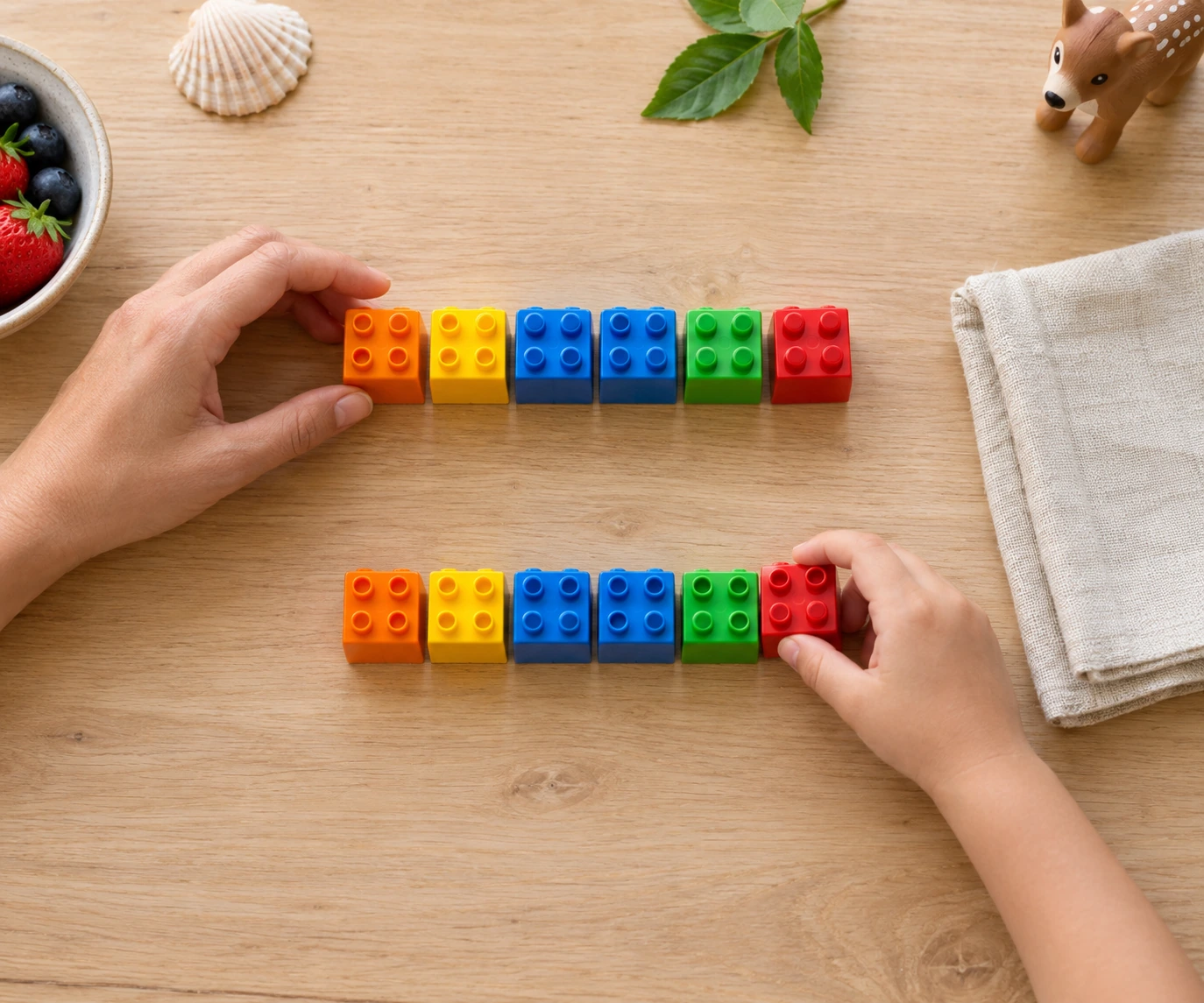
Ideas like these suit mixed ages. Older children can lead and add rules. Younger children can copy and join in.
How Can You Keep Holiday Learning Playful, Not Pressured?
Keep it playful by following the child’s interest, keeping it short and letting them stop. Pressure turns play into a chore.
The LEGO Foundation’s research identifies five characteristics of playful learning: the experience must be joyful, meaningful, actively engaging, iterative and socially interactive. These make a handy test for any holiday activity. If it is fun, it connects to something the child cares about, their mind is busy, they can try again and someone is playing with them, it passes.
Vygotsky’s Zone of Proximal Development reminds us that children grow most when gently stretched, given challenges just beyond what they can do alone with the right support. In the holidays, that might mean a slightly harder pattern or a longer story than last time, with a parent alongside. If a child is tired or resistant, step back to something easier. Rest is part of learning.
Some children need extra care with change. Autistic children, children with ADHD and children with sensory processing differences may find an unstructured break especially hard, though each child is different. A visual plan, a quiet corner and brick routines they already know can help. Six Bricks is a learning tool and does not replace professional support.
What Does a Holiday Day Look Like? A Scenario
Imagine a family with two children, aged five and nine, in the first week of the break. Over breakfast, they build the day in bricks: park, lunch, quiet time, swim, dinner. The five-year-old places the bricks. The nine-year-old explains the order.
After lunch is “brick time” for fifteen minutes. Today it is the memory pattern game. The nine-year-old makes a six-brick pattern and the five-year-old tries to copy it. Then they swap. There is giggling when the five-year-old makes a trickier pattern. Nobody keeps score.
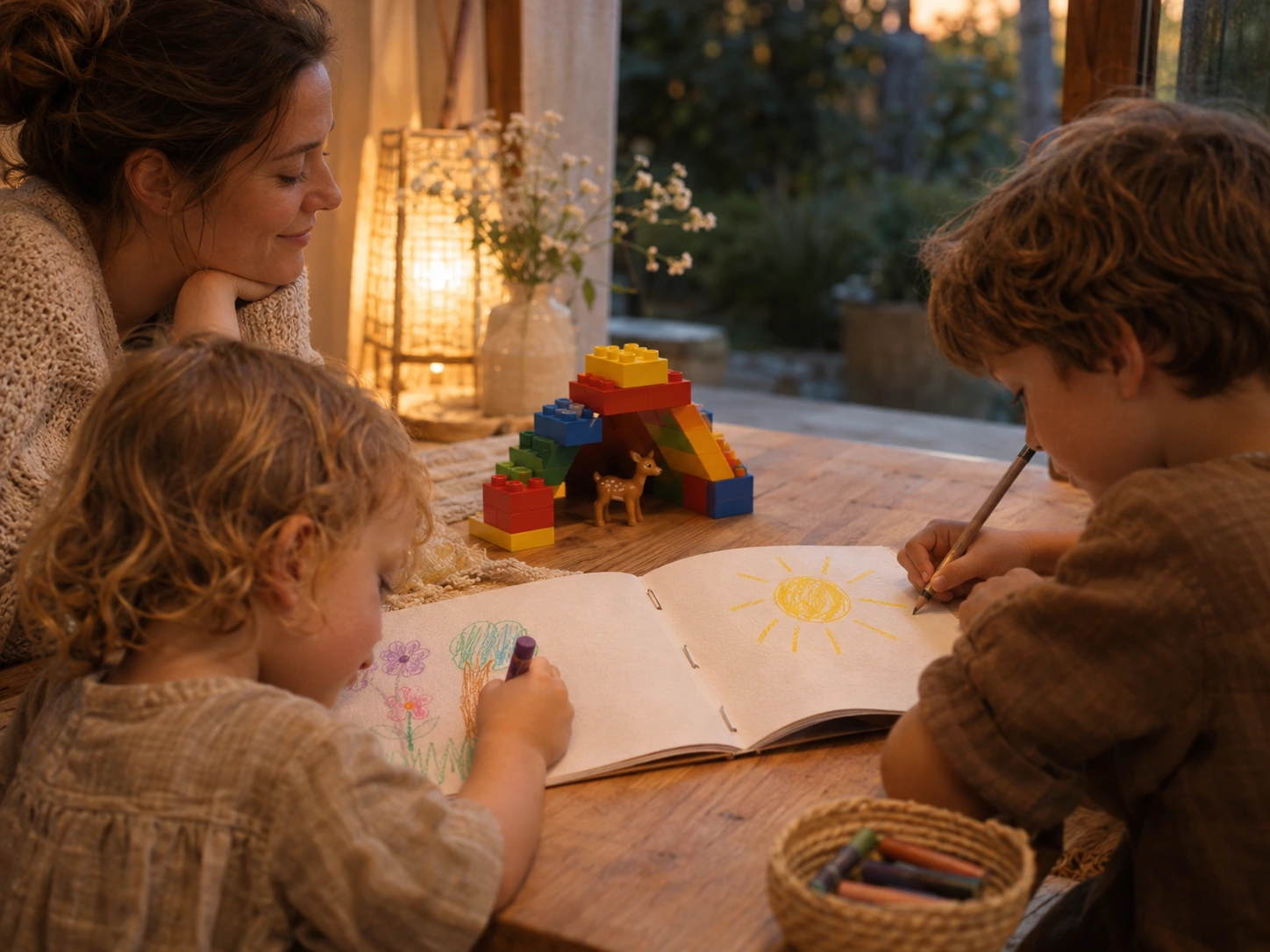
In the evening, they add one line to a family story book: the day’s best moment, drawn or told. By the end of the break, they have a small book of memories. The Build-a-Book resource uses structured storytelling to develop language and narrative skills and can give this idea a framework. Our Play&Learn resources offer ready-made activity ideas for homes.
None of this took more than half an hour of focused time. The rest of the day was free.
Key Takeaways
- A light holiday rhythm supports calm and self-regulation. It does not need to look like school.
- Short, hands-on play such as building the plan, mystery builder and memory patterns exercises executive function without pressure.
- Use the five characteristics of playful learning as a quick check: joyful, meaningful, actively engaging, iterative, socially interactive.
- Follow the child’s interest, keep activities short and allow rest.
- Children who find change hard may benefit from visual plans and familiar routines.
FAQ
What are some simple summer holiday play ideas for kids at home?
How do I keep my child learning over the summer holidays without making it feel like school?
How much structure do children need during school holidays?
How can I help my autistic child or child with ADHD during the long break?
What do I do when my child says they are bored?
Looking for easy ways to play this summer?
Explore our Play&Learn resources, Small Group Kit and Build-a-Book to bring short, joyful routines into your holiday days.
Explore Six Bricks Resources