
Helping preschoolers strengthen their attention span and memory doesn’t need to involve rigid routines or expensive tools. In fact, the most effective way to support cognitive skills like following directions, auditory processing, and working memory is by turning everyday moments into playful learning opportunities.
At Six Bricks Learning, we believe that meaningful child development happens best through play activities—specifically, those that involve movement, laughter, and hands-on interaction with familiar household objects, toys, and even simple visual cues like colored dots or stickers.

Why Focus and Memory Are Core to the Learning Process
Focus and memory fall under what educators and researchers call executive function skills—the building blocks of lifelong success. Essentially, these include working memory, cognitive control, attention skills, and flexible thinking. Furthermore, according to Harvard University’s Center on the Developing Child, strengthening executive function in early childhood supports everything from academic achievement to social interaction.
Benefits of Strengthening Focus and Memory Through Play:
- Improved verbal memory and auditory discrimination
- Better ability to follow complex instructions and sequences
- Growth in social skills, like turn-taking and emotional intelligence
- Enhanced problem-solving skills and thinking skills
With that in mind, let’s dive into some playful home strategies that build memory, attention, and fun.
Fun and Simple Games to Strengthen Focus and Memory at Home
Each of these activities requires little to no preparation. Moreover, many use items already in your toy library or home. Ultimately, with a sprinkle of positive reinforcement, you’ve got a recipe for learning new skills with joy.

Part 1: Foundational Focus and Memory Games
- Simon Says with a Twist
A classic that builds auditory processing, receptive language, and cognitive control. For instance, add variations like: “Simon says hop to the red dot, then spin once.” This is perfect for introducing sequencing. - Brick Stack Memory Game
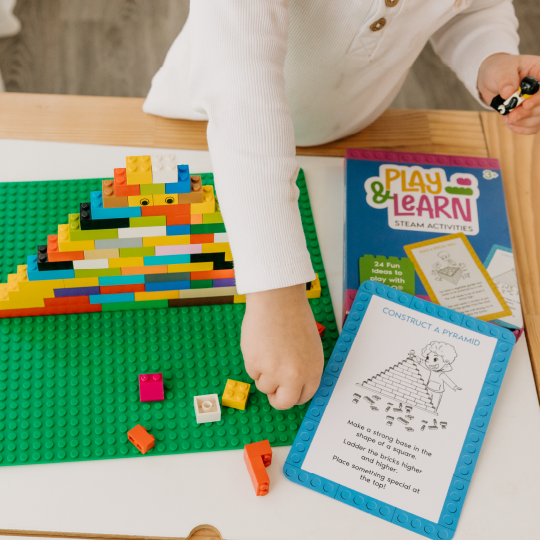
Use our Let’s Get Started Card Deck to create patterns using colored bricks. For example, say: “Stack blue, yellow, green,” then hide the stack. Your child then recreates it from visual memory. - Follow the Leader
This is an active physical play game where children copy your actions in a sequence. You can include jumping, spinning, patting knees, or clapping. As a result, this supports motor planning, visual memory, and imitation skills. - I Spy With a Skill Twist
Instead of just colors, try: “I spy something soft that starts with ‘b’.” Consequently, you can use this to build language development, auditory processing, and attention skills. - Hokey Pokey & Circle Time Songs
Combine rhythm, body movement, and lyrics to enhance auditory memory and motor coordination. Additionally, circle time songs and rhythm sticks create opportunities for emotional regulation and group play.
Part 2: More Creative Games to Boost Cognitive Skills
- Playful Instructions Game
Try giving multi-step commands like, “Touch your toes, clap, then spin.” Then, gradually increase complexity. You’re training executive function skills in real time! - Matching Socks & Sorting Games
Boost visual discrimination and thinking skills by folding laundry together. For example, have your child match colors or sizes—making it a perfect Preschooler play opportunity. - Story Bag Game
Fill a bag with toys or mystery objects, let your child pick one, and then create a story around it. Use our Cracker the Lonely Crocodile Book to inspire narrative thinking and dramatic and pretend play. - Pass the Parcel – Memory Edition
Wrap small objects or visual cues in layers. As the music stops, each child unwraps and recalls a movement or memory linked to the item, which in turn builds social interaction and focus. - Obstacle Course With Directions
Use play materials like cushions or hoops. Give commands like, “Crawl under the table, jump twice, and place the red brick on the chair.” This directly targets following directions, auditory processing, and spatial memory.
Real Tools for Real Learning: Six Bricks Products That Support Focus
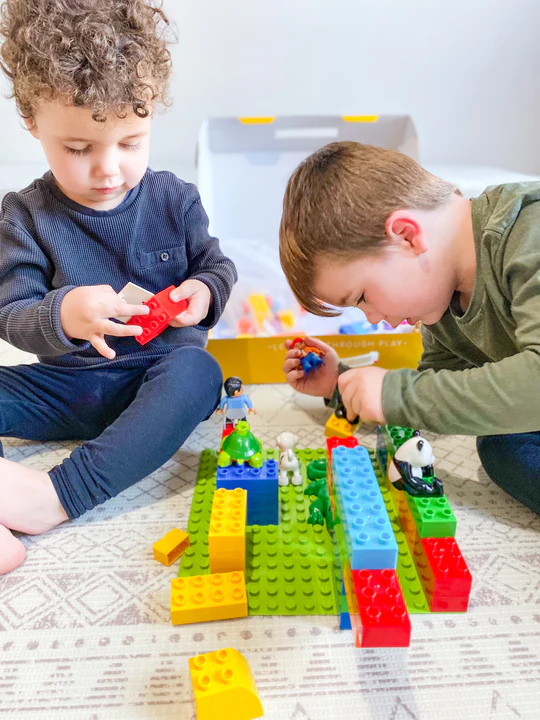
Six Bricks Learning products are designed by educators to nurture attention, sequencing, memory, and creative problem-solving in children aged 18 months and up.
- Let’s Get Started Card Deck: Perfect for early visual memory and attention span activities.
- Build-a-Book Sets: Including Diggy the Helpful Dog, these kits use storytelling and bricks to develop memory, emotion regulation, and teamwork.
- Large Group Kit: Ideal for group learning, circle time, and developing social-emotional and problem-solving skills.
- Six Bricks for Autistic Children: Tailored for children needing structured sensory play, repetition, and calming tasks.
Frequently Asked Questions
Q: What kind of memory games are best for preschoolers?
A: Simple, short games using visual aids, verbal prompts, or household objects work best. For example, try matching socks, “I Spy,” or our color-sequencing brick activities.
Q: How do I improve my child’s ability to follow directions?
A: Use games like Simon Says, Follow the Leader, or any activity with 2–3 steps. Importantly, always pause between instructions and use positive reinforcement.
Q: Can focus and memory be taught through outdoor play?
A: Absolutely. Activities like scavenger hunts, rhythm dancing, and brick stacking with physical movement combine physical play with cognitive stimulation.
Q: My child has attention difficulties. Can Six Bricks help?
A: Yes. The Six Bricks method is backed by early education research and endorsed by institutions like the Ministry of Education. In short, it supports attention skills, repetition, and multisensory learning—perfect for neurodiverse learners.
About the Author
Our expert team is led by Dr. Denise Meyerson, a pioneer in innovative learning design with over 30 years of global experience. With deep roots in cognitive science, childhood education, and creative play (including LEGO® Serious Play), our content is therefore grounded in research and inspired by real children.
Ready to Build Lifelong Skills?
You don’t need hours or screens to help your child thrive. In fact, you just need a few bricks, some playful energy, and the desire to make learning fun. Explore the Six Bricks Learning shop and start your child’s journey toward focus, memory, and joyful discovery—brick by brick.