
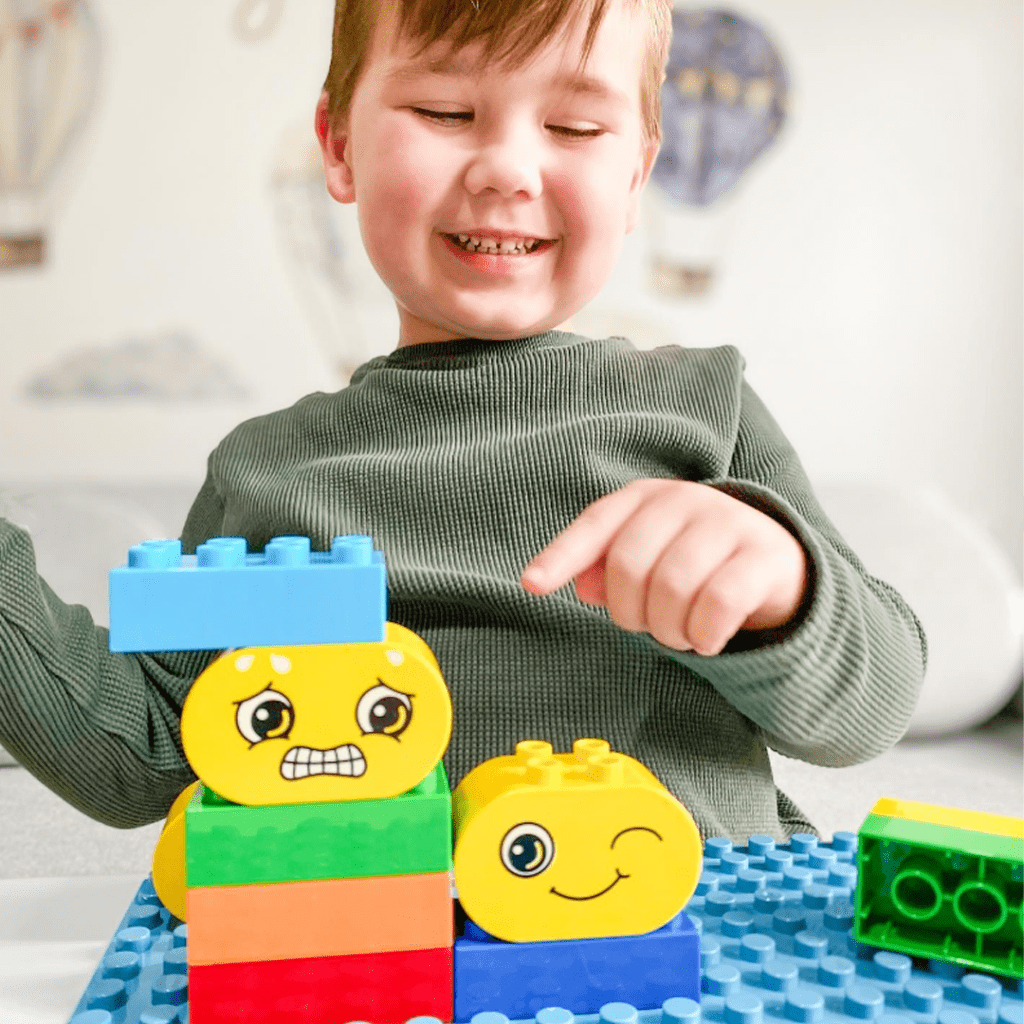
In many early learning and primary settings, the hardest moments of the day are not always the formal lessons themselves. Instead, the greatest challenges often occur during transitions. These include arriving at school, changing tasks, moving from the floor to the table, returning from outside, or settling down after excitement. For many children, and especially for neurodivergent learners, those moments can feel unpredictable, noisy, and cognitively demanding.
That is precisely why short, repeatable, hands-on routines are so powerful. They reduce language load, create predictability, and help children organise their attention before learning begins.
The Six Bricks method is especially well suited to this need. It is built entirely around brief, structured, playful activities that support focus, memory, sequencing, and self-regulation. Ultimately, visual, hands-on, and low-prep resources are exactly what inclusive classroom routines require.
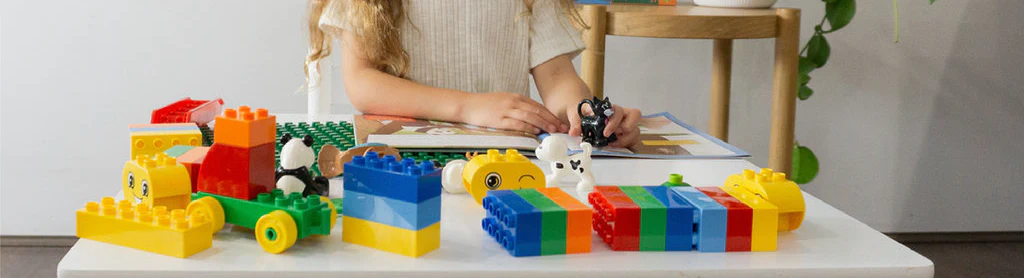
What Neuroinclusive Play Looks Like in Practice
Neuroinclusive play does not mean creating a completely separate activity for one specific child. Rather, it means designing experiences that offer the following elements:
- Predictability: Children know exactly what to expect and how to begin.
- Multiple ways to participate: A child can choose to build, point, copy, sort, match, or talk.
- Short success cycles: Activities are brief enough to feel highly achievable.
- Sensory-friendly structure: The task relies on tactile and visual cues rather than being overloaded with verbal instructions.
This is where Six Bricks proves to be incredibly effective. A single set of bricks can support routines for attention, sequencing, movement, emotional regulation, and communication—all within just a few minutes.
Practical Tools for the Classroom: The Neurodiversity Builders Deck
Educators need practical, low-prep, flexible routines that help neurodiverse learners participate successfully. The Neurodiversity Builders deck is a practical resource explicitly designed for early learning centres, schools, and specialist educators. It provides short, playful activities that build learning and self-regulation simultaneously.
By anchoring classroom strategies in these tools, educators can effectively support transition routines, executive function, self-regulation in group settings, and sensory-friendly participation to reduce overwhelm.
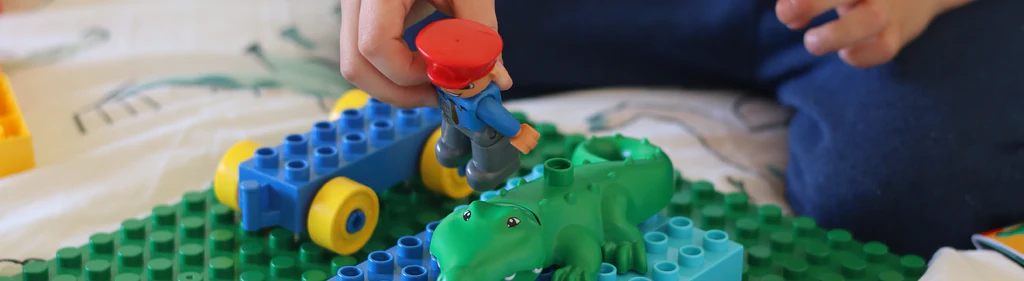
5 Neuroinclusive Six Bricks Routines Educators Can Use Tomorrow
1. Arrival Build
As children enter the classroom, they complete one simple prompt. For example, they might:
- build a tower with alternating colours
- copy a two-brick pattern
- place bricks in colour order
Why it works: This gives children an immediate, concrete task. Consequently, it lowers transition uncertainty and helps children settle into the room with a familiar routine. The Six Bricks method is designed precisely for these short, repeatable starts.
2. Calm Hands, Busy Brain
Use a brief sequence challenge to engage working memory. First, show a 3-brick order. Next, hide it. Finally, ask children to rebuild it. Children who need repetition can repeat the same sequence, while others can increase the difficulty.
Why it works: This supports working memory, attention, and task engagement without requiring long verbal explanations.
3. Feelings Build
Invite children to choose a colour pattern or shape that matches how they feel. They can build quietly, point to a peer’s similar pattern, or describe it aloud if they feel ready.
Why it works: This provides a lower-pressure route into emotional expression and regulation. Social-emotional learning is easily integrated using physical, safe objects.
4. First–Then Task Boards
Use bricks to represent the sequence of the next two tasks. For instance: First: mat time. Then: table activity. Children build or line up the bricks in the order the morning will happen.
Why it works: Many children regulate much better when the sequence is visible. Therefore, this directly supports executive function and predictability.
5. Partner Mirror Build
One child makes a quick pattern, and the other mirrors it. Verbal language can be completely optional. They can copy only, point and match, or narrate if they are ready.
Why it works: This supports shared attention, imitation, and cooperative participation without forced verbal demands.
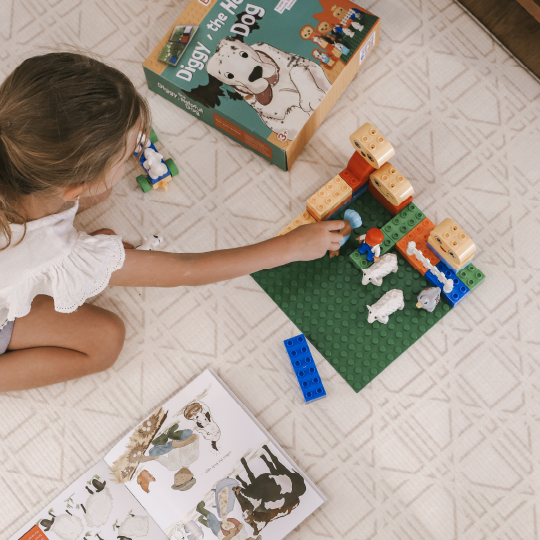
What Skills These Routines Build
Although these activities look simple on the surface, they support a broad, vital cluster of developmental skills:
- self-regulation
- attention and focus
- working memory
- pattern recognition
- communication
- social participation
- confidence during transitions
This aligns closely with the core methodology of Six Bricks: providing a structured, playful approach that supports cognitive, social, emotional, motor, and communication development.
Key Takeaways
- Short, predictable routines reduce cognitive load and help neurodiverse learners transition safely.
- Neuroinclusive learning focuses on predictability, multiple participation options, and sensory-safe structures.
- Practical tools like the Neurodiversity Builders deck offer low-prep activities for immediate classroom use.
- Six Bricks routines naturally build executive function, working memory, and self-regulation.
FAQ
Which resources support these routines?
These routines are perfectly supported by the Neurodiversity Builders deck, as well as our broader classroom-oriented Group Kits and Educational Resources.
Would this work only in specialist settings?
No. These routines are designed for early learning centres, mainstream schools, and specialist educators alike. They work beautifully across all inclusion settings.
About the Author
Six Bricks Learning creates hands-on resources, classroom kits, and educator training designed to make playful learning practical, structured, and inclusive across early childhood and the early primary years.
Bring Neuroinclusive Routines to Your Classroom
If you want classroom routines that are short, flexible, and easier for a wider range of learners to access, start with a neuroinclusive Six Bricks routine and build consistency from there.