
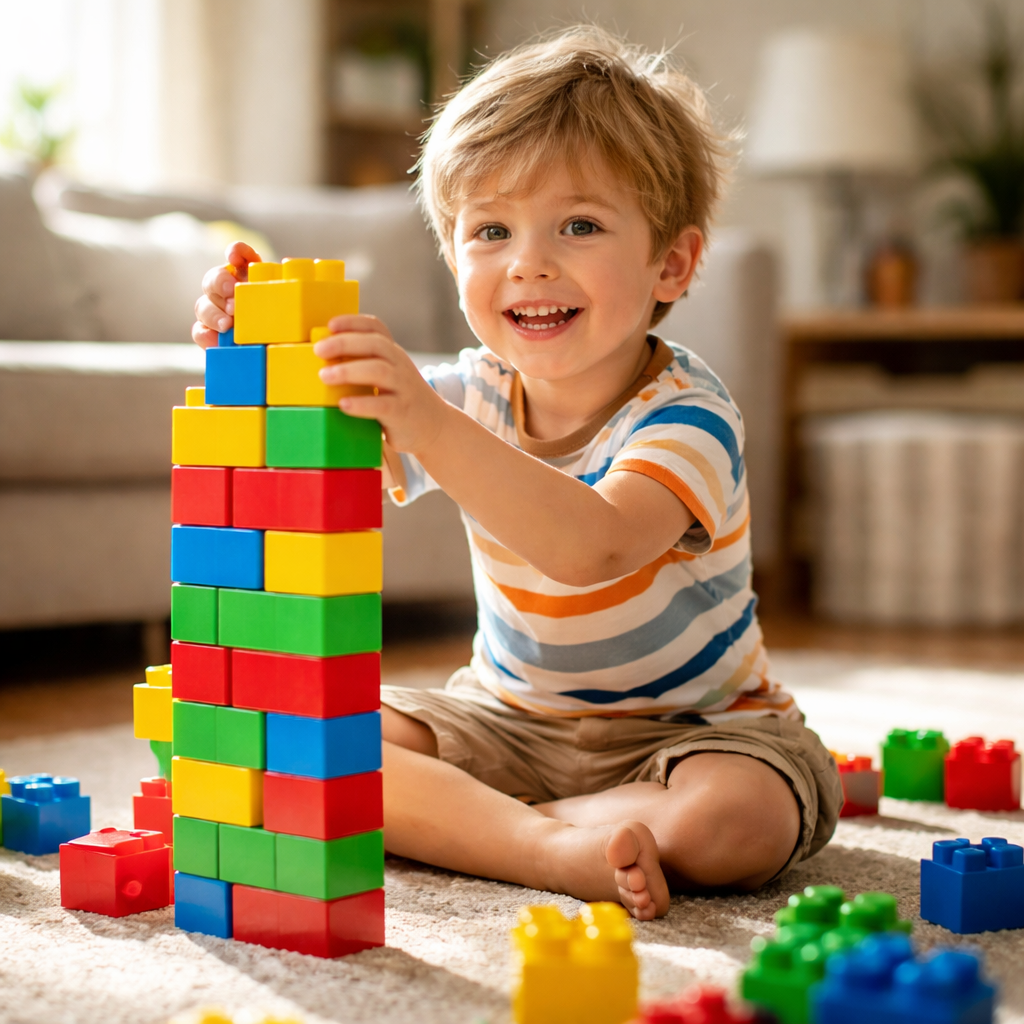
Children cannot regulate feelings they do not yet understand. Before a child can calm down, solve a conflict, or ask for help, they need the language and confidence to recognise what is happening inside them.
That is why emotional literacy is such an important part of early childhood education. It supports self-awareness, empathy, communication, and readiness for learning. And when it is taught through play, children are far more likely to engage, remember, and apply what they learn.
At Six Bricks Learning, this is where the method shines. The Six Bricks approach already supports cognitive and emotional development, and our classroom kits take this further with Emotions Bricks, diagrammatic mats, and storytelling tools that make feelings visible, concrete, and safe to explore.
What is Emotional Literacy?
Emotional literacy is the ability to:
- recognise feelings in yourself
- identify feelings in others
- talk about emotions with growing confidence
- respond in healthy, socially appropriate ways
For young children, this does not happen through lectures. It develops through repetition, modelling, play, and shared language. When educators build emotional literacy intentionally, children become better able to express needs before frustration escalates, participate in group learning, recover after disappointment, and understand how their actions affect others.
Why Six Bricks Works So Well for Social-Emotional Learning
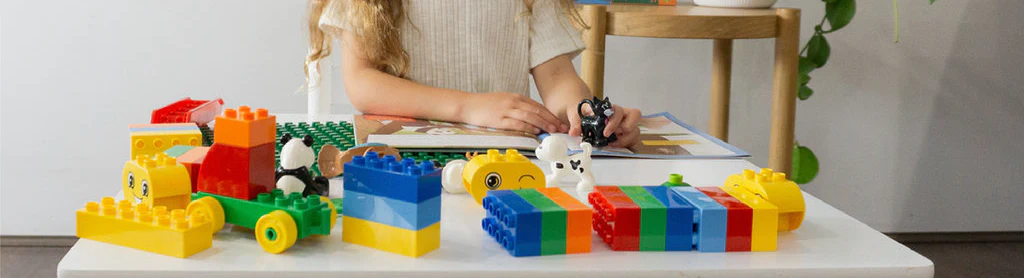
Six Bricks is a hands-on, playful system that uses short, structured activities with six coloured bricks to build a wide range of developmental skills. Across all learning environments, Six Bricks consistently supports cognitive, physical, social, and emotional growth through meaningful play.
For emotional learning specifically, the method works well because it is:
- Concrete: Young children often struggle with abstract emotional language. Bricks give them something physical to hold, sort, choose, and show.
- Visual: Colour, faces, patterns, and arrangement all support children who communicate more easily through visual cues.
- Playful: Children are more willing to talk about difficult feelings when the activity feels safe and engaging.
- Flexible: Some children may speak. Others may point, build, match, or observe first. All of these are valid ways to participate.
The Product Connection: Why the Large Group Size Kit is the Right Fit
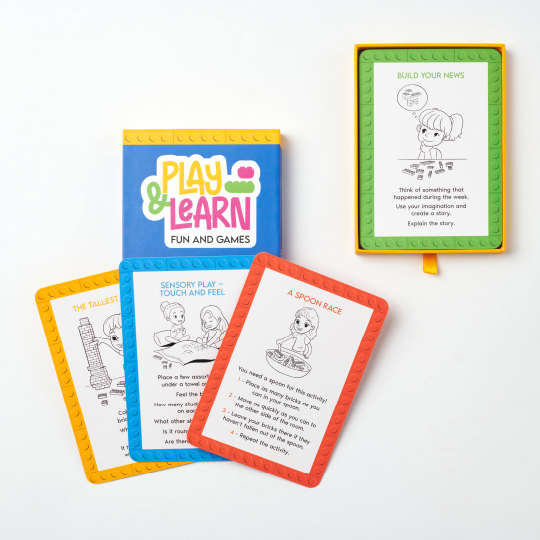
Our Large Group Size Kit is especially well suited to this topic because it is not just a tub of bricks. It includes enough individual sets for up to 16 children and adds specialised Emotions Bricks for social-emotional learning, Diagrammatic Mats for pattern building, and sensory/storytelling tools like ribbons and dice. Our broader Group Kits also feature people, animals, and emotions bricks as part of the classroom setup.
That matters because emotional literacy works best when it moves beyond one-off conversations and becomes part of daily classroom routines.
With the Large Group Size Kit, educators can effortlessly run:
- whole-group feelings check-ins
- partner empathy activities
- storytelling and conflict-resolution games
- calm-down routines during transitions
- small-group reflection tasks after play
5 Ways to Build Emotional Literacy with Six Bricks
1. Feelings Check-In Circles
Invite each child to choose an Emotions Brick or a brick colour that matches how they feel at the start of the day.
Prompt with:
- “Which brick shows how you feel right now?”
- “Would you like to say why, or just place it in the circle?”
This helps children practise emotional identification without pressure. Skills supported: self-awareness, vocabulary development, classroom belonging.
2. Build the Feeling
Ask children to build a quick model for a feeling such as excited, worried, frustrated, or calm. There is no single right answer. One child might build a tall shaky tower for nervousness; another might make a compact pattern for calm.
This encourages children to externalise feelings in a safe, creative way. Skills supported: emotional expression, symbolic thinking, confidence in sharing.
3. Storytelling with Emotions Bricks
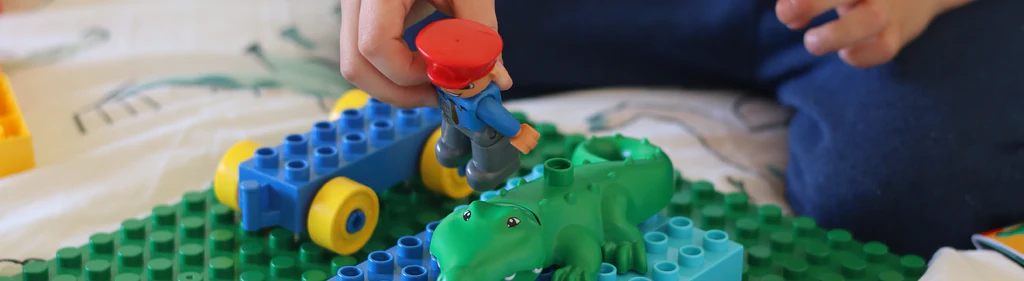
Use the ribbons, dice, people, or animal pieces from a group kit to create a short story prompt:
- “The character lost something important.”
- “Two friends want the same brick.”
- “Someone feels left out during the game.”
Then ask: How might the character feel? What could they do next? How could a friend help? This is a strong way to develop empathy and social problem-solving at the same time. Skills supported: perspective-taking, empathy, communication, conflict resolution.
4. Calm-Down Sequences
Use the mats or a repeated brick routine as part of a regulation strategy: choose your feeling, build a simple pattern, breathe as you stack, and name one thing that could help.
Because the steps are predictable, children begin to associate the activity with safety and regulation. Skills supported: self-regulation, routine-building, transition readiness.
5. Partner Mirror Builds
One child builds a feeling pattern, and the other mirrors it exactly before describing what they notice. This lowers the demand of direct emotional conversation while still building connection and observation. Skills supported: attention to others, shared focus, non-verbal communication, relational confidence.
What This Looks Like in Practice
A strong emotional literacy routine does not need to be long. A classroom could use the Large Group Size Kit in a 10-minute morning routine like this:
- Step 1: Check in – Each child selects a feeling brick.
- Step 2: Build – Children create a quick model or pattern to represent that feeling.
- Step 3: Share – Children describe, point, or partner-share.
- Step 4: Reset – If needed, the class does a short calm-down stacking sequence before moving into the day.
Over time, this routine gives children repeated practice in recognising emotions, using emotional language, and seeing that all feelings can be talked about safely.
Why This Matters Beyond Behaviour
Emotional literacy is not only about “managing behaviour.” It is about giving children tools for learning and relationships.
When children can identify and communicate how they feel, they are more able to stay engaged in tasks, seek help before becoming overwhelmed, recover after mistakes, collaborate with peers, and build resilience.
That makes emotional literacy a classroom priority, not an optional extra.
Key Takeaways
- Emotional literacy helps children recognise, name, and respond to feelings.
- Six Bricks is well suited to this because it makes emotions concrete, visual, and playful.
- The Large Group Size Kit is a strong product match because it includes Emotions Bricks, diagrammatic mats, and storytelling tools like ribbons and dice for whole-group participation.
- Short, repeatable routines can strengthen self-awareness, empathy, communication, and regulation.
FAQ
What age group is this best for?
The Large Group Size Kit and associated mats are positioned for early learning, Pre-K, Kindergarten, and ages roughly 3–5 for some mat resources, though many social-emotional routines can scale into the early primary years.
Do children have to talk during these activities?
No. They can point, build, match, or observe first. Emotional literacy grows through many kinds of participation.
Why use a group kit instead of loose bricks?
Because the group kits are designed for simultaneous participation and include specialised pieces like Emotions Bricks and extra supports for storytelling and pattern-based learning.
Can this support neurodiverse learners too?
Yes. The visual, tactile, low-language nature of the activities makes them flexible for diverse learners, and we already highlight adapting Six Bricks for neurodiverse classrooms.
About the Author
Six Bricks Learning helps educators and families build strong foundations through structured, hands-on play that supports cognitive, social, emotional, and physical development.
Foster Emotional Literacy Through Play
Ready to make emotional literacy part of your classroom routine? Explore our Group Kits to bring feelings, storytelling, and regulation into everyday learning through play.
Explore Large Group Size Kits