
Early Literacy Through Storytelling and Play: How Build-a-Book Brings Language to Life
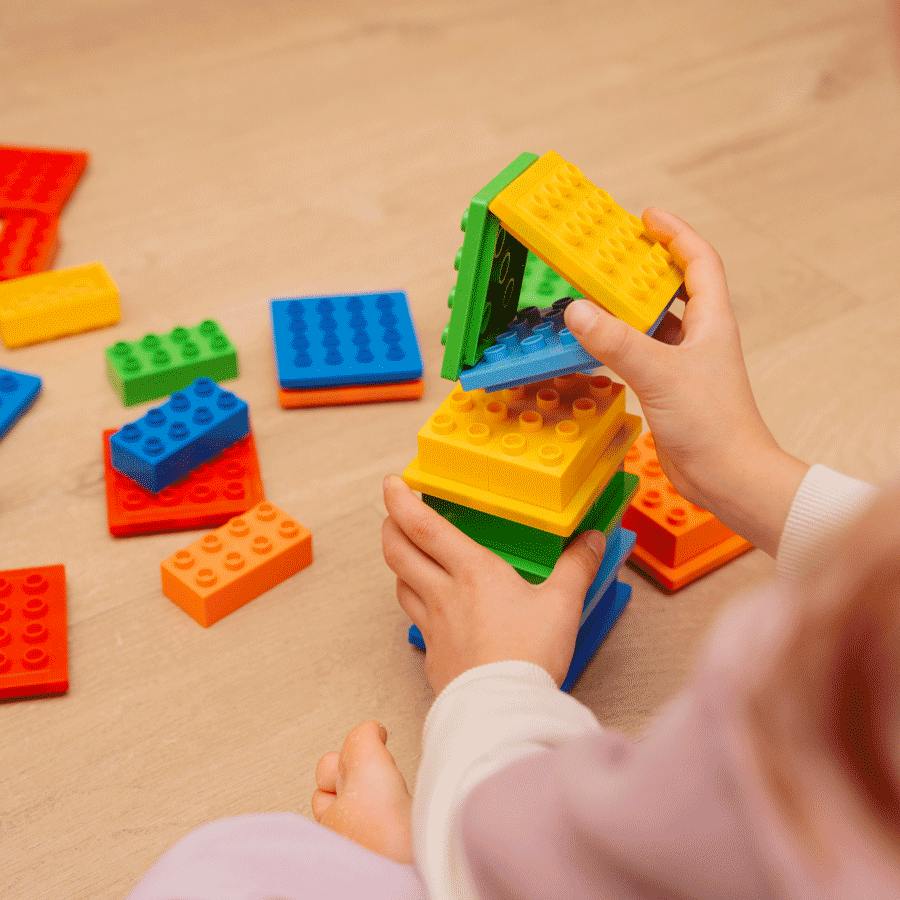
Picture a Foundation classroom on a quiet Tuesday morning. A child sits at a small table and carefully places a blue brick next to a yellow one. Her eyes dart between the page in front of her and the growing structure in her hands — because she isn't just listening to a story. She is building it. When her teacher asks her to retell what happened on the last page, she doesn't hesitate. She points to her build, tells the story back with confidence, and reaches for the next brick.
That moment — that spark of engagement, comprehension, and language pride — is exactly what early literacy through play looks like in practice. Yet it stands in stark contrast to what many young learners experience: passive listening, sit-still instruction, and the quiet anxiety of not knowing if they understood at all.
Early literacy is one of the most important windows in a child's development. The skills children build in their first years of schooling — vocabulary, listening comprehension, narrative sequencing, and a love of stories — will shape how they read, write, and communicate for the rest of their lives. Crucially, when those skills develop through hands-on, joyful, active play, the outcomes are measurably stronger. That is the promise at the heart of the Six Bricks Build-a-Book approach.
Quick Overview
- Who is this for? Early childhood educators, Foundation to Year 2 teachers, learning support practitioners, and parents of early learners.
- What will you learn? Why hands-on storytelling strengthens early literacy skills — and how the Six Bricks Build-a-Book series puts that research into classroom practice.
- Key takeaway: When children actively build what they hear, they comprehend more deeply, retell more accurately, and develop language skills that stick.
Why Early Literacy Is About More Than Learning to Read
When educators talk about early literacy, the conversation often jumps straight to letter recognition, phonics, and decoding. Those skills matter enormously — but they sit at the top of a much deeper iceberg. In fact, the foundations beneath them include oral language development, listening comprehension, narrative awareness, vocabulary breadth, and the understanding that stories have structure: a beginning, a middle, and an end.
Research in early language development consistently shows that children with stronger oral language at age five go on to achieve significantly better reading comprehension throughout primary school. Furthermore, vocabulary at school entry ranks as one of the strongest predictors of reading outcomes years later. In addition, the capacity to retell and sequence a story draws on working memory — the cognitive skill that underpins almost every act of intentional learning.
The role of working memory in language development
Specifically, working memory is the brain's ability to hold and use information in real time. When a child listens to a story, for instance, working memory holds earlier events in mind while the child processes new ones, tracks characters across pages, and builds a mental model of what is happening and why. In short, children with stronger working memory tend to show better language outcomes — including storytelling, comprehension, and early writing.
Importantly, working memory is trainable — especially in early childhood. Short, structured activities that ask children to hold a sequence, repeat a pattern, or retell events directly exercise this capacity. For example, Six Bricks activities, including Build-a-Book, engage working memory through hands-on, multi-sensory play. As a result, when children build a scene from a story page and retell it, they do more than demonstrate comprehension — they actively strengthen the cognitive infrastructure that supports literacy long-term.
Why oral language comes first
Strong readers begin as strong talkers. Indeed, children who enter school with a rich spoken vocabulary find it easier to decode, comprehend, and connect with texts. Yet oral language development often receives less structured attention than phonics in the early years curriculum. Clearly, this is a gap worth closing. Fortunately, Build-a-Book addresses it directly — because every step asks children to use language actively: to narrate their builds, respond to questions, and retell what they heard.
What Happens When Children Build What They Hear
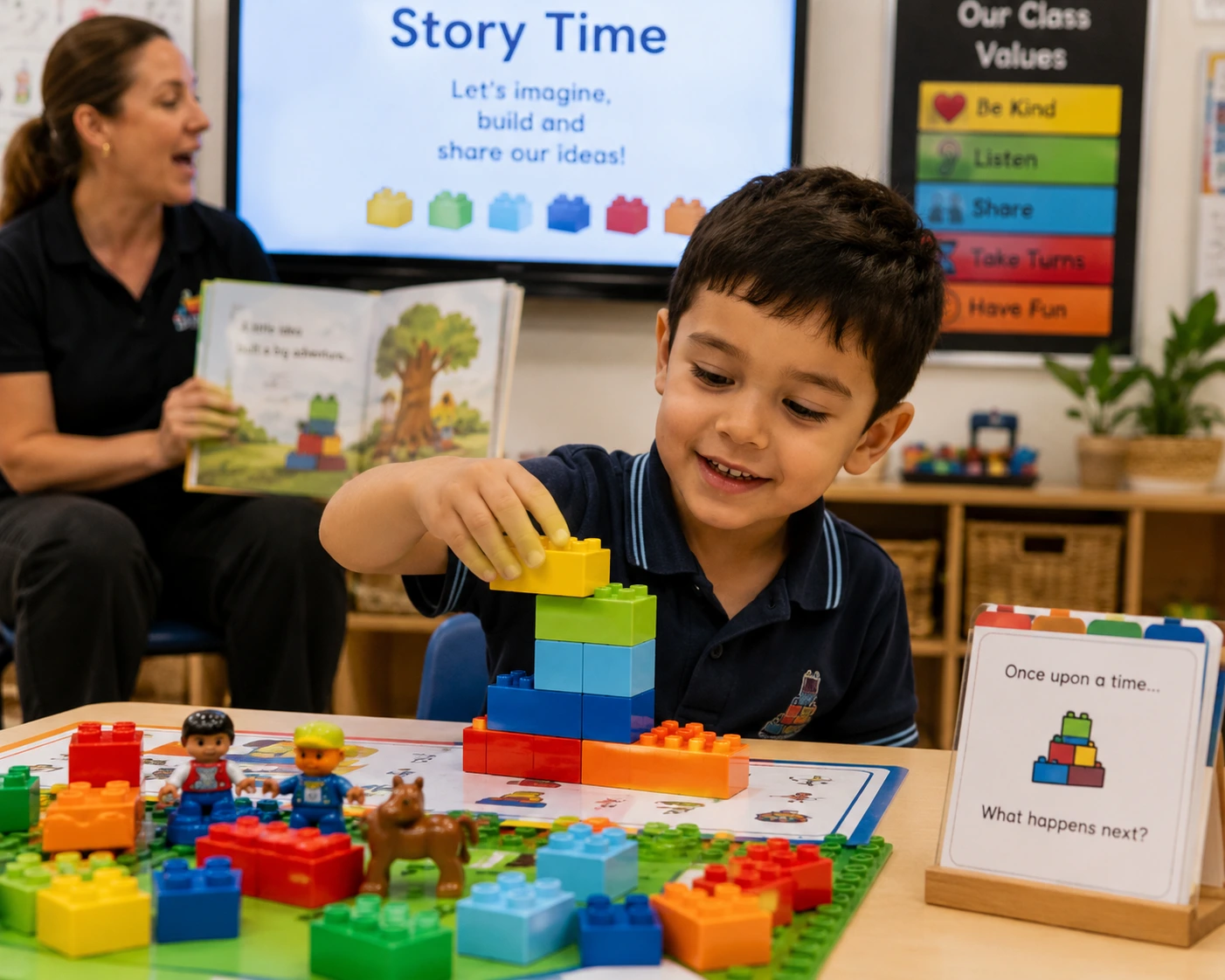
Embodied cognition theory offers a powerful lens for understanding why Build-a-Book works so well. The theory holds that learning lives in the body as much as in the mind. When children handle and move physical objects, therefore, they build stronger conceptual understanding than through visual or auditory input alone. For language learning in particular, this is significant: when a child physically constructs a scene they just heard described, they encode the story across multiple memory systems at once.
As a result, multi-sensory learning — engaging touch, sight, and sound together — strengthens memory and supports children who learn best through hands-on experience. Consider, for instance, a child who builds a crocodile sitting by a river out of blue and orange bricks. That child will consequently remember the scene far more vividly than one who only heard it described. Indeed, the build becomes a physical anchor for the language.
Four literacy skills that storytelling through building develops
The Build-a-Book approach — read a page, build the scene, share the build, retell the story — looks deceptively simple. In practice, however, each step does targeted literacy work:
- Listening comprehension: Children must listen actively enough to build what they heard. In other words, passive listening simply doesn't survive the build challenge.
- Vocabulary and language: As children share their builds and retell the story, they practise using new words in context — consequently the most effective form of vocabulary growth.
- Narrative sequencing: Building scene by scene reinforces story structure — specifically, what came first, what happened next, and how it ends. This is also the same structure children later use in their own writing.
- Fine motor skills: Placing, adjusting, and connecting bricks builds the hand strength and precision that children need for writing. Moreover, these physical skills are often under-resourced in early years settings.
Why play quality matters as much as play itself
Not all play, however, delivers the same learning outcomes. Accordingly, the LEGO Foundation's research identifies five characteristics that make play genuinely educational: the experience must be joyful, meaningful, actively engaging, iterative, and socially interactive. Build-a-Book meets all five. The builds are joyful. The story provides meaning. Children are actively minds-on throughout. Furthermore, each retell is a fresh iteration. And in pairs or small groups, the activity becomes a rich site of social language — negotiating, discussing, and celebrating each other's interpretation of the scene.
Six Bricks Build-a-Book: How It Works in the Classroom
The Six Bricks Build-a-Book series makes reading time active, hands-on, and genuinely engaging for early learners. Specifically, it pairs a narrative picture book with brick-based building — so children don't just listen to the story, they construct it, scene by scene.
The four-step Build-a-Book cycle
- Read — the educator or child reads a page of the story aloud.
- Build — children use their DUPLO®-style bricks to construct the scene they just heard.
- Share — children show their builds to the group or a partner and narrate what they made.
- Retell — children retell the story section in their own words, using their build as a prompt.
This cycle fits naturally into whole-group story time, small-group literacy rotations, and early intervention sessions. It needs minimal preparation and, moreover, moves smoothly between individual and collaborative modes. Because the structure is predictable, it also suits children who depend on routine and clear scaffolding — including those with additional learning needs.
The current Build-a-Book titles
Currently, the series includes four stories, each available as a complete kit (with bricks) or as a standalone book for centres that already own Six Bricks resources:
- Kito, the Bravest Kitten — a story about courage and facing fears, ideal for conversations around emotion and resilience.
- Dimples, the Littlest Dinosaur — a gentle story about belonging and trying your best, perfect for transition-to-school themes.
- Diggy, the Helpful Dog — a story about kindness and community that opens up natural social skills discussions.
- Cracker, the Lonely Crocodile — a story about friendship and belonging that resonates with children navigating early social life.
Notably, each title connects literacy learning to emotional themes — giving educators a built-in pathway into social-emotional development alongside language work.
Practical Scenarios: Build-a-Book in Action
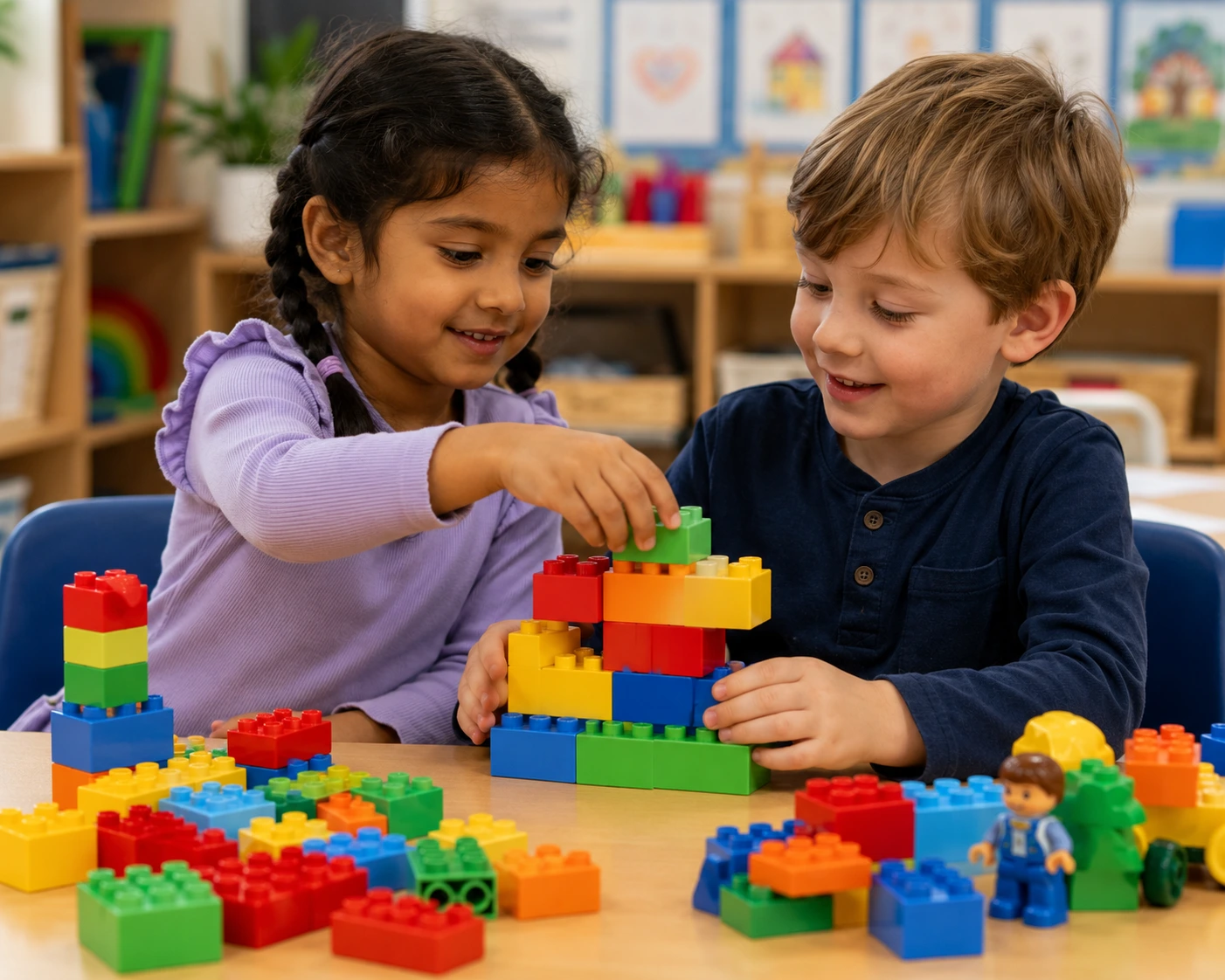
So how does this look in a real classroom? Below are two scenarios that show how educators use Build-a-Book across different contexts — one whole-class, one small-group.
Scenario one: whole-class story time, Foundation
A Foundation teacher gathers her class on the mat and holds up Kito, the Bravest Kitten. She reads the first page aloud, then pauses. Each pair of children has a tray of bricks in front of them. "Now build what just happened to Kito," she says. Consequently, the room fills with the click of bricks as children construct their version of the scene — a yellow brick for Kito, a flat blue one for the wall he has to climb.
After two minutes, she invites three pairs to share their builds and prompts with open questions: "What did Kito do next? How do you think Kito felt?" As a result, the language in the room is rich, varied, and genuinely connected to the text. When she reads on, the children are ready — engaged, focused, and invested in what happens next.
Scenario two: small-group literacy rotation, Year 1
In a Year 1 classroom, a learning support teacher works through Diggy, the Helpful Dog with four children who need extra scaffolding. She reads slowly, pausing after each page. Each child builds independently and then shares their build with the group.
When a build unlocks a voice
Notably, one child in the group — low-verbal and rarely engaged in class discussion — is animated and confident throughout. The build gives him something concrete to point to, show, and narrate from. Consequently, his language in this session surpasses anything the teacher has heard from him in traditional reading groups.
At the end of the session, each child retells the whole story using their collected builds as a scene-by-scene sequence. This retell draws directly on narrative sequencing, working memory, and oral language. Because it relies on a physical record, moreover, it is fully accessible to every child at the table.
Supporting Diverse Learners Through Hands-On Literacy
Indeed, one of Build-a-Book's greatest strengths is what it does for children who have not traditionally thrived in literacy sessions. For neurodiverse learners — including children with ADHD, autistic children, children with developmental language disorder, or those with sensory processing differences — the standard "sit and listen" approach to story time creates real barriers to engagement and comprehension.
Accessibility by design, not by exception
Build-a-Book addresses these barriers as design features, not as add-on adaptations for "special" learners. First, the predictable four-step structure gives neurodiverse learners the routine and scaffolding they depend on. Second, the hands-on building channel offers an alternative entry point for children who find it hard to process language through listening alone. Third, the sharing phase invites — but never demands — verbal participation. A child can show their build and point without needing to narrate at length.
Vygotsky's Zone of Proximal Development reminds us that children grow most when adults stretch them gently — offering challenges just beyond what a child can do alone, with the right support in place. Similarly, Build-a-Book adapts to this principle with ease. An educator can offer more support during the build phase, add more prompting during sharing, or simplify retelling requirements for children who need extra time. As a result, the same activity serves a confident reader and a child still developing oral language — both are challenged, and both belong.
Going deeper with professional development
Educators who want to extend their practice can explore the dedicated Six Bricks for Autistic Children online course. It provides targeted, practical guidance for using the Six Bricks methodology with autistic learners in early childhood and primary settings.
Key Takeaways
- Early literacy rests on oral language, listening comprehension, and narrative sequencing — not just phonics. Building these foundations through play is both evidence-aligned and effective.
- Embodied cognition explains why Build-a-Book works: children who physically build what they hear encode the story across multiple memory systems, which deepens comprehension and recall.
- The four-step cycle — read, build, share, retell — develops listening, vocabulary, narrative structure, and fine motor skills in a single, joyful activity.
- Build-a-Book supports neurodiverse learners by design: its predictable structure, tactile channel, and flexible participation modes create genuine access for children with a wide range of learning profiles.
- Each title connects literacy to emotional themes — courage, belonging, kindness, friendship — giving educators a natural bridge into social-emotional learning.
- Build-a-Book needs minimal preparation and fits smoothly into whole-class story time, small-group rotations, and early intervention sessions.
Frequently Asked Questions
What age group is Build-a-Book most suitable for?
How does Build-a-Book support early literacy skills?
Do I need to already have a Six Bricks kit to use Build-a-Book?
Can Build-a-Book be used with children who have ADHD or are on the autism spectrum?
How long does a Build-a-Book session take?
How is Build-a-Book different from regular shared reading?
Bring Stories to Life in Your Classroom
Explore the Build-a-Book series and discover how active, brick-based storytelling can transform literacy time for every learner in your care.
Explore Build-a-Book →