
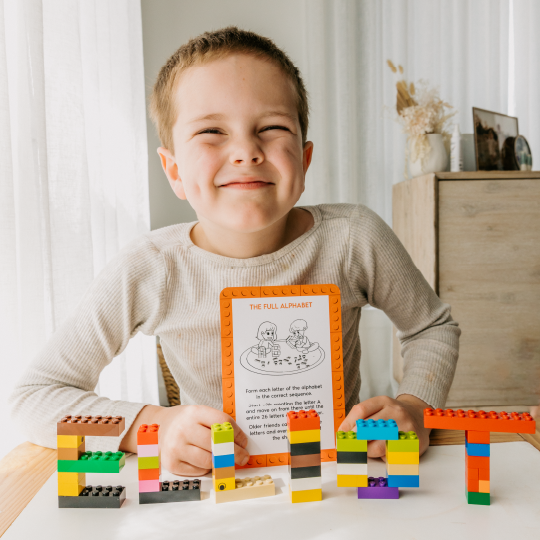
The Six Bricks Method—developed by Care for Education and backed by the LEGO Foundation—is more than a classroom trend. It’s a proven pedagogy of play designed to activate neural pathways and develop the cognitive and social-emotional skills young children need for lifelong learning.
In regions like the Eastern Cape and Western Cape of South Africa, where the Department of Basic Education and partners like UNICEF South Africa support Foundation Phase initiatives, Six Bricks has transformed learning from Grades R to 3—making formal curriculum goals achievable through play-based learning.
Let’s explore four hands-on activities using Six Bricks that promote school readiness, both at home and in the classroom.

1. Build Fine Motor and Visual Perceptual Skills
Manipulating LEGO® DUPLO®-style coloured bricks helps children develop fine and gross motor movement, essential for writing, cutting, and self-care.
Try this from the Six Bricks Activities Deck:
Use pegs or tongs to pick up bricks from an egg box and match them to a color pattern. This boosts eye-hand coordination, color matching, and spatial awareness.
📦 For educators and therapists, activity cards in our Six Bricks kits include differentiation ideas for inclusive classrooms and Occupational Therapy.
2. Strengthen Working Memory and Sequencing
Children build working memory by remembering and executing multiple-step instructions—a critical skill in early school years.
Try this:
Using a Six Bricks mat, call out a series of actions (e.g., “Place the red brick on top, then blue on the left, jump twice, and sit down.”) Ask the child to listen carefully and repeat.
This supports:
- Cognitive processing
- Inhibitory control
- Listening comprehension
👩🏫 Popular in schools like Hermana Primary and Cenyu Public School, this strategy blends movement activities with memory enhancement for dynamic results.

3. Promote Emotional Regulation and Social Interaction
Using story kits like Cracker, the Lonely Crocodile, children engage in multi-sensory learning to explore emotions and practice empathy. With emotions bricks, they express feelings and build narratives collaboratively.
Try this:
Ask children to show what “sad” looks like using bricks, and then build a scene showing how to move toward “happy.” Integrate a reward system or achievement tracker for positive reinforcement.
💡 Especially effective for autistic children, this activity improves emotional vocabulary, group work, and family connection.
4. Support Attention, Inhibitory Control, and Reasoning
Children thrive when they can control impulses and stay focused—both of which are fostered through structured play. Activities from the Move, Jump & Follow Mat and Crossing the B-Line Mat teach inhibitory control through fun, kinetic tasks.
Try this:
Use the Six Bricks Activities Deck to create a STEM Challenge. For example: “Build a bridge using only three bricks that holds a toy animal.” Ask the child to think, plan, and test. Then review and revise.
🧠 This taps into:
- Problem solving
- Logical thinking
- Cognitive flexibility
Integrated Learning Tool for Teachers & Parents
Six Bricks isn’t just a learning tool—it’s a movement supported by educators like Brent Hutcheson, promoted in schools from Australia to South Africa, and piloted in places like Willow Grove Primary School. It bridges the gap between independent play and structured learning in both home environments and after school care.
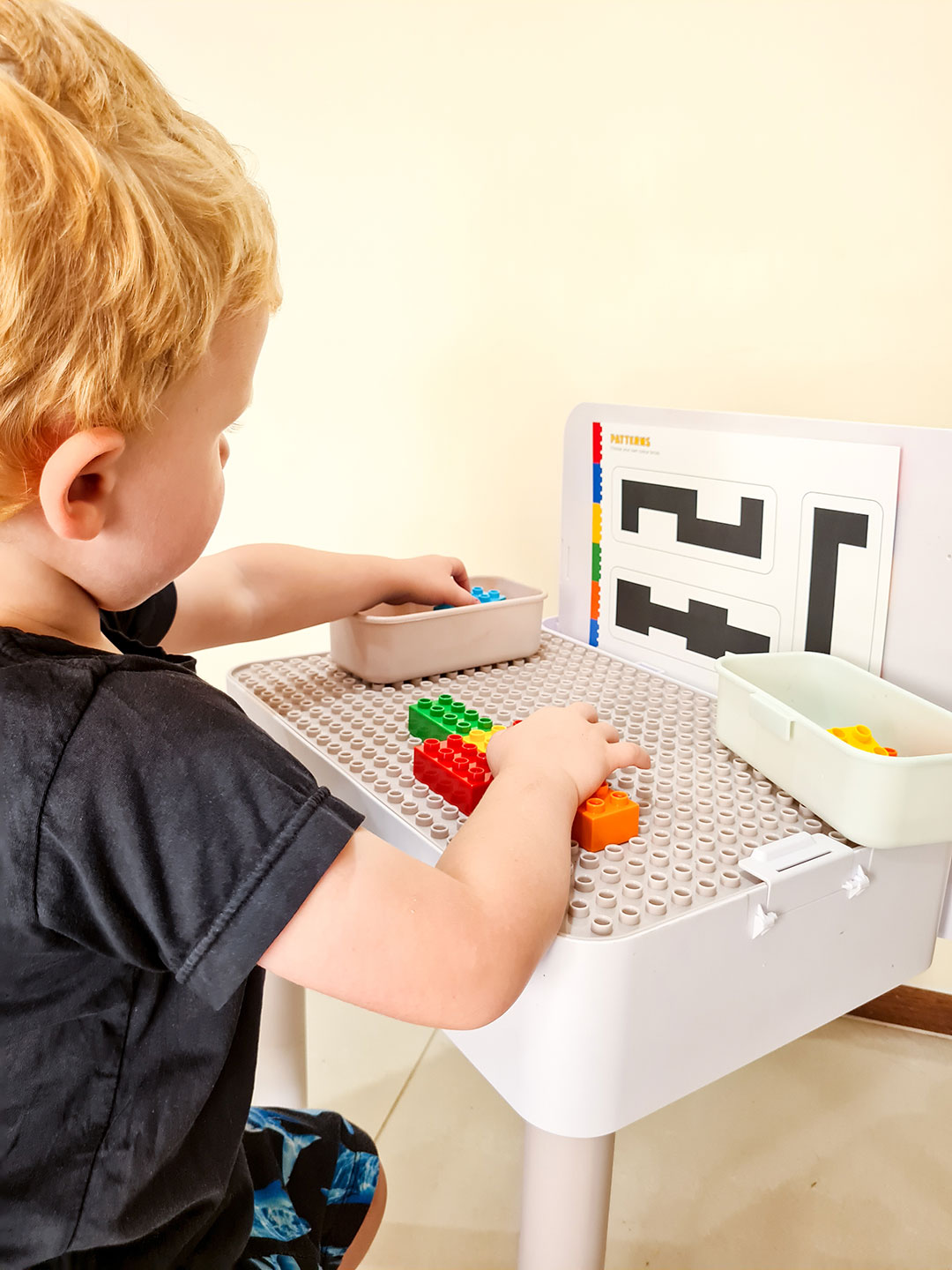
Shop the Learning Tools That Make It Easy
🎒 Recommended Products:
- Let’s Get Started Deck: Ideal for toddlers and preschoolers
- Large Group Size Kit: Perfect for schools and centers
- Cracker, the Lonely Crocodile: Build-a-Book story for social emotional learning
- Six Bricks for Autistic Children: Adaptable strategies and supports
- Six Bricks Accreditation Course: For educators integrating play into curriculum
About the Authors: Six Bricks Content Team
This article was developed by the expert team at Six Bricks Learning, led by Dr. Denise Meyerson, a global innovator in early education and learning design. With over 30 years in education, her work brings neuroscience, pedagogy, and creativity into powerful tools that change how children learn.