
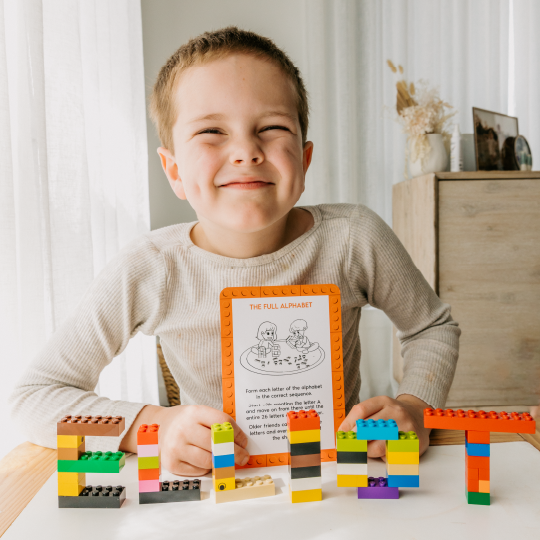
Play-based learning has emerged as a cornerstone in therapeutic and educational strategies for neurodivergent children. With structured, sensory-rich activities, Six Bricks creates a supportive framework that fosters social skills, strengthens executive function, and enhances emotional development—especially in learners diagnosed with autism spectrum disorder or attention-deficit/hyperactivity disorder (ADHD).
Right from the start, these play facilitation tools offer children with autistic features, language difficulties, or developmental coordination disorder a chance to engage in meaningful, goal-directed play. Their colorful bricks, adaptive cards, and story-guided formats function as more than toys—they’re educational resources and assistive tools for therapeutic growth.

1. The Six Bricks Advantage for Neurodivergent Learners
Six Bricks kits uniquely support:
- Sensory Play and Integration: The textured, colorful bricks provide essential sensory experiences, aiding sensory integration for children with SPD, autism, or ADHD. This aligns with principles of sensory integration therapy and floor time play therapy used in occupational therapy.
- Symbolic and Interactive Play: Through symbolic play and interactive play therapy, children build social scenes or recreate emotions—activating mirror neurons and enhancing emotional regulation and social functioning.
- Attention and Executive Function: Building structured sequences targets executive functioning skills—critical for learners facing cognitive load, poor impulse control, or difficulty with internal state language.
- Communication Development: With story bricks and emotion recognition tools, children practice expressive speech. Many therapists also integrate AAC devices and assistive apps alongside Six Bricks for children using communication devices or learning through brain-computer interface technology.
2. Developmental Impact Overview
| Developmental Focus | Benefits for Neurodivergent Kids | Six Bricks Approach |
|---|---|---|
| Social Play | Builds joint attention and family cohesion | Cooperative group builds, turn-taking tasks |
| Emotion Regulation | Supports behavioral modifications | Emotion cards, color-coded tasks, reward systems |
| Manual Dexterity | Aids fine motor skills, like writing or zipping | Brick stacking, pattern copying, brick threading |
| Therapeutic Experience | Complements behavioral therapy and art therapy | Integrates visuals, storytelling, and tactile feedback |
| Language Improvement | Stimulates symbolic speech and internal state language | Paired narration and storytelling with builds |
3. Real Use Case: Adaptive Tools in Action
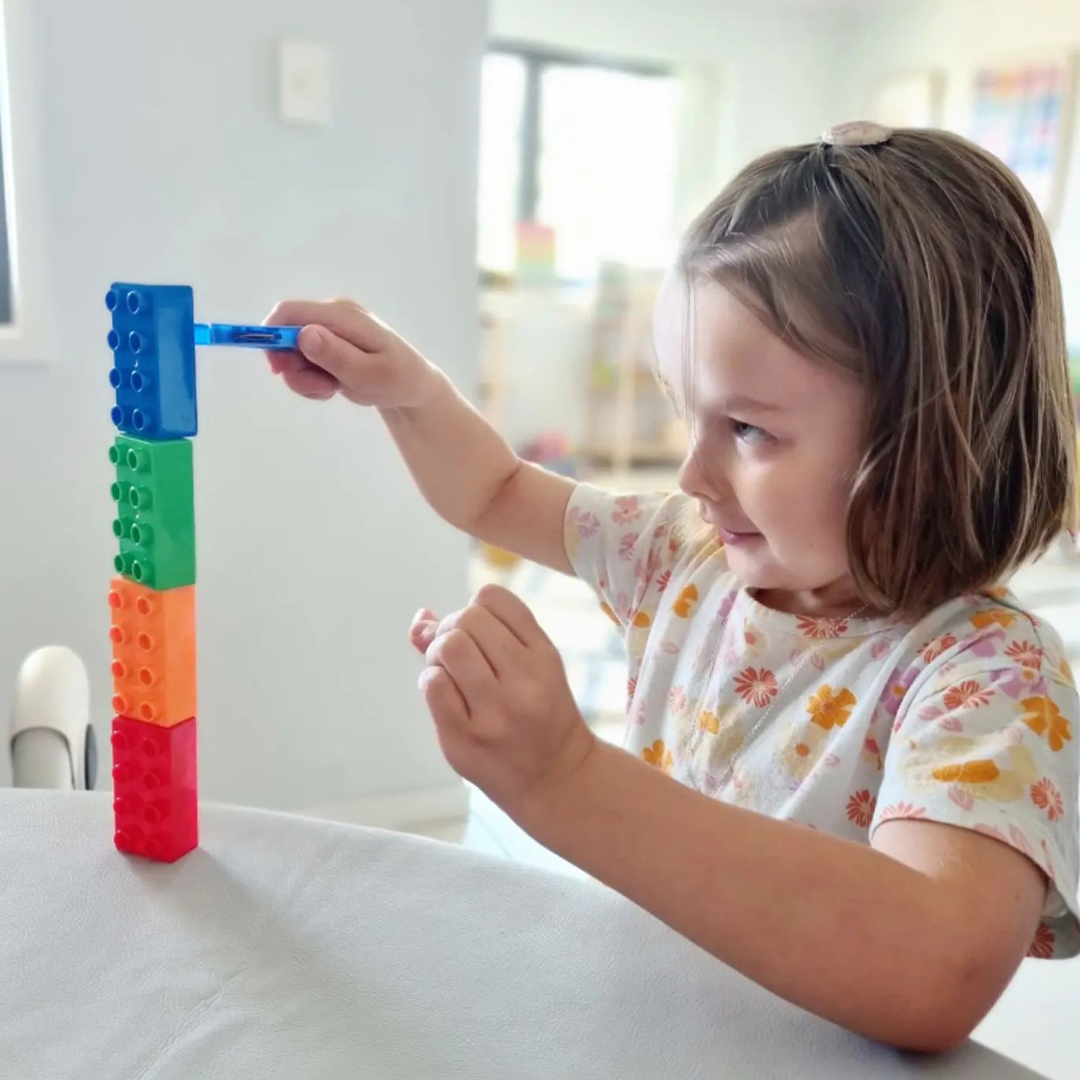
Aria, 5, with dual diagnoses of autism and ADHD, displayed frequent sensory-seeking behaviors and limited verbal communication. Her family, supported by an Allied Health Professional from the National Association for Special Educational Needs, introduced a Six Bricks play protocol at home.
- Used emotion bricks to express how she felt during daily routines.
- Built simple narrative scenes in floor time sessions.
- Gradually integrated on-screen media (paired videos showing emotion labels) via assistive apps.
Within three months, Aria began using internal state language: “I build happy,” “I feel yellow.” Her family reported improved social functioning in family leisure activities and fewer meltdowns during transitions. This reflects the synergy between therapeutic experiences, play-based therapy, and home-based JASPER models—where parental training meets support in education.
4. Integrating Six Bricks in Classrooms and Therapy
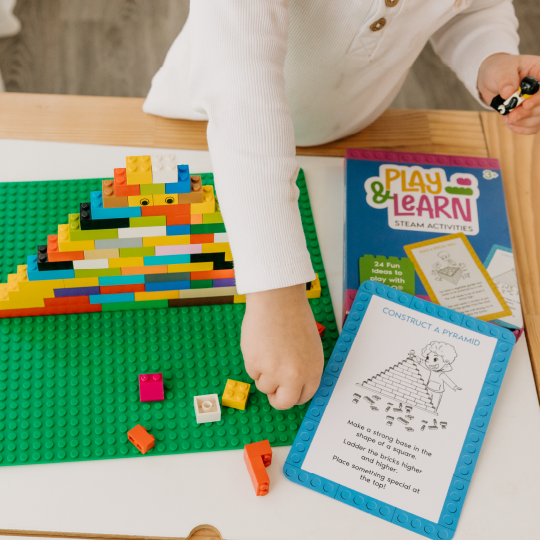
Educators and therapists—especially those following Neurodiversity Affirming Practices—use Six Bricks to:
- Reinforce attachment theory and behavioral responses in early childhood.
- Facilitate behavioral dialogue and encourage symbolic play with toy trains and doll play.
- Enhance engagement in equine-assisted counselling or therapeutic horseback riding by transitioning from physical activity to calming brick builds.
- Pair with platforms like M&J Games or We Rock the Spectrum Kid’s Gym for broader developmental impact.
5. Tech, Neuroscience & the Future
Emerging intersections include:
- Brain-derived neurotrophic factor (BDNF) growth observed with repetitive, structured hand tasks like building bricks.
- Activation of the prefrontal cortex and cortico-cerebellar systems during problem-solving builds.
- Use of smart robotics and emotion recognition technology for AI-assisted brick tasks—soon to appear on digital platforms optimized for learners needing support in education.
The LEGO Foundation’s Play for All Accelerator highlights such integrative models—validating the Six Bricks approach within global education and therapy networks.
FAQs
Q: Can Six Bricks be used alongside behavioral therapy?
Yes. Many therapists integrate it as part of interactive play therapy, behavioral modifications, or art therapy for improved outcomes.
Q: Is it suitable for non-verbal children?
Absolutely. The kits work well with AAC devices, assistive apps, and even brain-computer interface technologies when used with communication partners.
Q: How does it help Attention Deficit Hyperactivity Disorder?
By engaging the executive function system—especially attention, sequencing, and impulse control—bricks act as calming and focusing adaptive tools.
Q: Are there classroom applications?
Yes. Teachers using classroom innovation and inclusive approaches find that Six Bricks supports curriculum adaptation without overhauling lesson plans.
Q: Is Six Bricks compliant with child privacy laws?
Yes, we honor Children’s Online Privacy Protection Act (COPPA) regulations in all digital content and guides.
About the Author: The Six Bricks Content Team
Our blog is powered by educators, therapists, neuroscientists, and advocates of autistic-identity-first language and Neurodiversity Affirming Practice. We collaborate with Allied Health Professionals, parent and caregiver support networks, and international programs to ensure our content is evidence-based, inclusive, and always child-centered.
Call to Action
Six Bricks isn’t just a toy—it’s a play-based therapy system, a therapeutic experience, and a tool for emotional and cognitive development. Whether you’re a parent, therapist, or educator, discover the kit that meets your needs—and start building breakthroughs today.